Expert Summary
Small, consistent emotional investments—personalized gestures, clear communication, and regular check-ins—boost intimacy, happiness, and long-term relationship health.

The ROI of Romance: Why Your Relationship is Your Most Valuable Asset
Your relationship is one of the best investments you’ll ever make. Research shows that strong partnerships improve health, boost happiness, and even increase longevity. Think of it as an emotional bank account - small, positive actions like kind words or gestures act as deposits, while negativity or neglect withdraws from the balance. The goal? Build a high-balance relationship that thrives even during conflict.
Here’s the key takeaway: small, consistent efforts matter more than grand gestures. By focusing on emotional connection, personalized actions (like love languages), and clear communication, you can strengthen your bond over time. Tools like the Relationship Report Card or even creative options like Roma Llama stories can help you track progress and keep things engaging. Treat your relationship like any valuable asset - check in regularly, make thoughtful investments, and watch it grow.
Evaluate Your Relationship's Current State
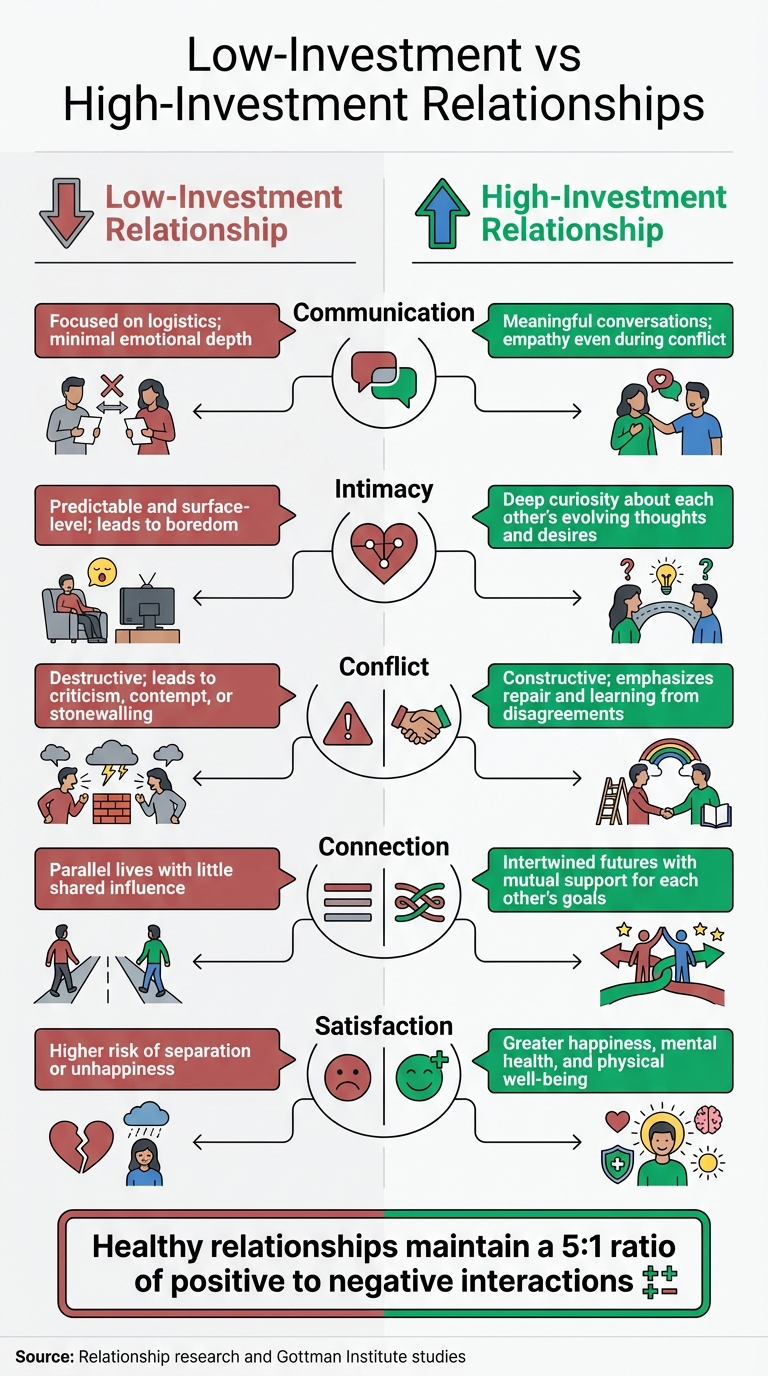
Low-Investment vs High-Investment Relationships: Key Differences
Before diving deeper into your relationship, it’s important to take stock of where things stand. Think of it like checking your bank balance before making big financial decisions - it’s not about judgment but about understanding what’s working and what needs attention. This self-assessment helps you create a roadmap for building a stronger connection.
Measure Your Emotional and Physical Connection
Start with a Relationship Report Card by rating key aspects of your relationship - Communication, Intimacy & Connection, Trust & Security, Conflict Resolution, Shared Goals & Values, and Support & Appreciation - on a scale from 1 to 4 [5]. Be honest in your evaluation. A score between 61 and 72 suggests a solid foundation, while scores under 40 might indicate that seeking professional guidance could be helpful [5].
Another helpful tool is the Relationship Closeness Inventory (RCI), which looks at three key areas: how much time you spend together, the variety of activities you engage in, and how much you influence each other’s decisions and future plans [4]. Helena Abernethy, a relationship researcher, explains:
"Closeness grows when you actively invest in time, activities, and mutual influence" [4].
High closeness often involves spending more than 31 hours of alone time together each week and participating in at least eight different activities as a couple [4].
To dig deeper, ask yourself reflective questions like, “When do I feel most vulnerable?” or “What does emotional safety mean to me?” [7]. These questions can reveal how well you’re nurturing emotional intimacy - the ability to share your deepest feelings while feeling supported and safe [7]. Physical intimacy also plays a role, encompassing everything from hugs and kisses to meeting each other’s needs in a way that feels fulfilling for both partners [5][2].
Clinical Psychologist Randi Gunther, Ph.D., warns against falling into what she calls the “roommate trap”:
"When you think you know each other so well that you don't have to keep exploring each other anymore, your relationship is moving towards parallel roommates rather than intimate lovers" [6].
If most of your conversations revolve around errands or bills, it might be time to focus on deeper emotional exchanges. Using these tools, identify the areas where small changes could make the biggest difference. Then, compare your findings to the traits of thriving relationships to pinpoint opportunities for growth.
Compare Low-Investment and High-Investment Relationships
Once you’ve assessed your relationship, it’s easier to recognize the differences between low-investment and high-investment dynamics. Research highlights four key ways to boost relationship satisfaction: emotional gestures, material gestures, shared activities, and supporting your partner’s social connections [2]. Healthy relationships also maintain a 5-to-1 ratio of positive to negative interactions [5].
Here’s a quick comparison of low- and high-investment relationships:
| Feature | Low-Investment Relationship | High-Investment Relationship |
|---|---|---|
| Communication | Focused on logistics; minimal emotional depth [5] | Meaningful conversations; empathy even during conflict [5] |
| Intimacy | Predictable and surface-level; leads to boredom [6] | Deep curiosity about each other’s evolving thoughts and desires [6] |
| Conflict | Destructive; leads to criticism, contempt, or stonewalling [7] | Constructive; emphasizes repair and learning from disagreements [6][7] |
| Connection | Parallel lives with little shared influence [4] | Intertwined futures with mutual support for each other’s goals [4] |
| Satisfaction | Higher risk of separation or unhappiness [2] | Greater happiness, mental health, and physical well-being [2] |
Tools like the free Relationship Report Card or the $45.00 Gottman Assessment [10] aren’t about judging your relationship - they’re guides to help you see where things are thriving and where they could improve [4]. To get the most out of these tools, complete them individually first to ensure honest answers, then compare your results with your partner [5]. Instead of trying to fix everything at once, focus on the area with the lowest score. This targeted approach allows you to make meaningful progress without feeling overwhelmed.
sbb-itb-069f7a3
Create Personalized Gestures for Emotional Returns
Once you've evaluated where your relationship stands, it's time to focus on thoughtful actions that deepen your emotional bond. The secret? Personalization. Tailor your gestures to align with what your partner values most, rather than relying on assumptions. As Suzy Daren, a Licensed Marriage and Family Therapist, points out:
"Until we understand our partners' preferences, each person will express love in the way that they like to receive it rather than in the mode that is best for their partner" [8].
Think of these gestures as meaningful investments in your connection. Research backs this up: consistent, everyday actions often have a stronger impact over time than sporadic grand gestures [13].
Design Romantic Experiences Based on Your Partner's Preferences
A great starting point is to build what relationship expert John Gottman calls a "Love Map." This involves learning the details of your partner's inner world - everything from their favorite childhood memories to their current stressors and future goals [12]. Pay close attention to how they naturally express affection, as this often mirrors how they wish to receive love [11].
Be mindful of and respond to small bids for connection - like a shared meme, a sigh, or a passing comment. These moments, though subtle, are key to fostering intimacy. Gottman's research found that couples who stayed together responded to these bids 86% of the time, compared to just 33% for those who divorced [14]. The good news? Responding doesn’t require elaborate plans - just a willingness to be present.
For daily connection, go beyond the usual "How was your day?" Instead, ask curiosity-driven questions like, "What made you laugh today?" or "What was the most frustrating part of your day?" Wrap up the evening with a short, 10-minute conversation about the day's highlights and challenges. Interestingly, studies on gratitude reveal that couples who regularly express appreciation often spend nearly an extra hour together each day [13].
Physical gestures also play a big role in strengthening emotional bonds. A 20-second hug can reduce cortisol and increase oxytocin [14]. A six-second kiss during greetings or farewells can help maintain romantic closeness [12]. Even something as simple as gazing into each other’s eyes for four minutes can synchronize brain activity, creating a sense of unity [11].
These small but meaningful actions naturally transition into understanding and applying your partner's unique love language preferences.
Apply Love Languages for Better Results
Building on personalized experiences, love languages offer a clear framework for expressing affection in ways that resonate most with your partner. The five core love languages - Words of Affirmation, Quality Time, Physical Touch, Acts of Service, and Receiving Gifts - help you understand how your partner best feels loved [15] [16]. To identify their primary love language, pay attention to frequent complaints (e.g., "You never help with the dishes") or recurring requests [15]. Modern counseling has even broadened this framework to include additional expressions like Emotional Support, Shared Experiences, Intellectual Connection, Personal Space/Independence, and Financial Security [17].
Here are some gesture ideas tailored to each love language:
- Words of Affirmation: Offer a specific compliment that highlights a unique trait, such as "I admire your calm under pressure." You could also leave a quick "proud of you" note on their mirror or in their wallet [13].
-
Acts of Service: Surprise your partner with an act that eases their daily burden, like cleaning their car or refilling their gas tank. As Suzy Daren notes:
"A busy parent is going to be able to relax more quickly at the end of the day when their partner helps with the cooking, cleaning, and/or children's bedtime routines. These acts are a win-win because when tension is reduced, love flows more easily" [8].
- Quality Time: Dedicate screen-free moments to each other, like a 15-minute coffee chat in the morning. Make a weekly date night a non-negotiable part of your routine [8] [13].
- Physical Touch: Incorporate small, affectionate touches throughout the day, such as a hand on their shoulder, a quick back rub, or simply sitting close together [8].
- Receiving Gifts: Focus on thoughtful, meaningful tokens rather than expensive items. A favorite pastry or a small keepsake can communicate deep care [16].
Improve Intimacy Through Better Communication
Making personalized gestures can strengthen your connection, but clear and honest communication is what truly builds intimacy. Consider this: only 9% of couples who struggle to discuss sex report being sexually satisfied [18]. On the other hand, emotional intimacy has been shown to significantly boost sexual desire between partners [19]. The way you communicate impacts every part of your relationship, from casual conversations to your most vulnerable moments.
Have Open and Honest Conversations
Sharing your desires and boundaries openly can transform your relationship. Certified Sex Therapist Kyle Benson emphasizes:
"The less direct you are about what you want, the less likely you are to get it" [21].
Using clear "I" statements, like "It feels amazing when you touch me here", can help express your needs without creating tension [21]. This approach encourages constructive dialogue and reduces defensiveness.
Timing is equally important. Research shows that the way couples handle initial conflict can predict long-term outcomes [20]. Find a time when your partner is most receptive [22], and avoid bringing up sensitive topics when emotions are running high.
A helpful tool for communication is the "Amorous Scale", where you rate your interest on a scale from 1 ("no thanks") to 9 ("oh, yes!") [21]. This method allows you to express arousal levels without making refusals feel personal. You can also ease into difficult conversations by referencing an external source, like an article, podcast, or book, to explore topics together in a relaxed way [22].
Dr. John Gottman highlights the importance of consistent connection:
"Every positive thing you do in your relationship is foreplay" [18].
By fostering open dialogue, you create a foundation of emotional safety and physical intimacy. Once this foundation is in place, the next step is to focus on active listening to deepen trust.
Build Trust with Active Listening
Active listening is a powerful way to create emotional safety and nurture vulnerability. Dr. Scott Conkright explains:
"Active listening means fully engaging, understanding, and then responding thoughtfully" [23].
To practice active listening, give your full attention - maintain eye contact, eliminate distractions, and reflect back key points to show you understand (e.g., "It sounds like you're feeling…"). The Speaker-Listener Technique can also be helpful. In this method, one partner speaks while the other reflects back what they heard, using phrases like, "What I hear you saying is…" [24]. This approach helps avoid cycles of criticism and defensiveness.
Validation is another essential element of active listening. It doesn’t mean you have to agree with your partner, but it does mean acknowledging their feelings as valid. Michelle Lee of The Keely Group explains:
"Validation doesn't mean agreeing. It means acknowledging the other person's emotional experience" [24].
Before jumping into problem-solving, ask your partner, "Vent or solve?" to clarify whether they need empathy or advice [19]. Often, simply feeling heard is what matters most. Even setting aside just 3–5 minutes for one person to speak without interruption can significantly strengthen trust and connection.
Increase Erotic Connection with Roma Llama

With trust as your foundation, it’s time to reignite passion. Roma Llama, an AI-powered platform, crafts personalized erotic and romantic stories tailored to your relationship. Acting as a "Third Space", it offers a private environment where couples can explore shared desires. This safe setting helps develop what experts call a "shared erotic language", which can deepen trust and build romantic anticipation in everyday life [25].
By combining emotional safety with playful exploration, this approach strengthens intimacy and invites creativity into your relationship.
Create Personalized Erotic Stories Step-by-Step
Getting started is quick - less than 10 minutes [27]. First, set your preferred spice level, ranging from sweet romance to steamy erotica, based on what feels right for both partners. Then, personalize characters by adding names, descriptions, and traits, and choose a setting - whether it’s a rustic cabin, a tropical beach, or even a fantasy realm. Once your story is ready, you can share it through the app or print it for a cozy reading session together.
Roma Llama also includes features like "Roll The Dice", which introduces an element of surprise and allows you to adjust intensity as your comfort grows. For couples in long-distance relationships, audio stories can create shared rituals that keep the connection strong [47,50].
How Roma Llama Improves Your Relationship
Roma Llama enhances intimacy by blending creative storytelling with shared experiences. Research highlights that exploring narratives together can break down emotional barriers and boost overall relationship satisfaction [25]. For example, a couple married for eight years used Roma Llama to revisit their college dating days through "fantasy reunion" stories. After a month, they reported a 46% increase in weekly intimacy [28]. Additionally, user data shows that couples dedicating just 15 minutes per week to the platform experienced a 16% drop in routine boredom [26].
| Customization Option | Description | Benefit | Quick-Start Tip |
|---|---|---|---|
| Spice Levels | Gentle to explicit intensity | Matches comfort levels, eases nerves | Start with "medium" for balance |
| Character Personalization | Add likeness, traits, and preferences | Boosts realism and connection | Use photos for precise details |
| Story Settings | 50+ themes (romance, adventure, BDSM) | Sparks creativity and novelty | Pick a setting tied to shared memories |
| Length & Format | Short scenes or full narratives | Works with busy schedules | Try 5-minute audio stories first |
| Collaborative Mode | Real-time co-editing | Builds teamwork and trust | Alternate writing prompts for fun |
These tools not only inspire your imagination but also lead to real improvements in your relationship.
For just $4.99 per premium story, Roma Llama is an affordable way to nurture your romantic connection [25]. Long-term relationship advocate David B. shared:
"Roma Llama gave us a structured way to explore our relationship dynamics without the usual pressure. The guided storytelling felt like a collaborative breakthrough - a structured way to explore our intimacy" [25].
Before diving in, discuss boundaries with your partner to ensure comfort. Start with non-explicit stories to ease into the process, and consider scheduling regular "story nights" like a date night. Keep a shared journal to track how this creative journey strengthens your emotional and physical bond.
Track Progress and Keep Investing in Your Relationship
Monitor Your Emotional and Intimacy Growth
Keeping tabs on your relationship’s progress doesn’t have to be complicated. Simple, consistent check-ins can help you stay aligned and connected [31]. A great way to do this is by scheduling regular conversations and using reflection techniques that fit into your routine.
One effective method is a weekly 30-minute "Start, Stop, Continue" check-in. This involves identifying one new action to start, one negative habit to stop, and one strength to continue building on [29]. For example, you might decide to express appreciation more often, stop interrupting during discussions, and keep prioritizing quality time together.
Another key metric to watch is your positivity ratio - the balance of positive to negative interactions. Research suggests that happy couples maintain about 20 positive interactions for every 1 negative interaction in daily life. During disagreements, aim for a 5:1 positive-to-negative ratio [30]. This balance helps foster resilience and satisfaction, even during conflicts.
For a deeper dive, try quarterly assessments focusing on five key areas: communication, trust, conflict resolution, intimacy, and shared goals [9]. Start by completing individual checklists, then compare your results to identify areas of alignment and improvement. If you’re looking for structured guidance, tools like the Gottman Relationship Adviser (around $129.00) offer research-based assessments and personalized plans [30].
Once you’ve pinpointed areas for growth, it’s time to focus on reinvesting those gains into your relationship.
Reinvest Your Gains for Long-Term Connection
After identifying areas of improvement, channel your progress into actions that deepen your connection. Spread your efforts across different aspects of emotional investment: care, shared activities, thoughtful gestures, and social support. These might include giving genuine compliments, planning date nights, surprising each other with small gifts, or respecting each other’s family and friends [2].
To keep things fresh, regularly update your romantic gestures and shared activities. If a particular effort has been working well, think about how you can expand on it. Consistently reinvesting in your relationship strengthens your bond and ensures it remains a priority.
Clinical psychologist Robert N. Johansen, Ph.D., highlights the importance of emotional growth in relationships:
"Our closest relationships... reveal our level of emotional development through countless daily interactions... we earn the rich endowments of emotional maturation which, in turn, directly contributes to the quality, health and longevity of our relationships" [3].
Consider scheduling quarterly "investment check-ins" to discuss both emotional and practical goals. Reflect on whether you’re both still aligned on your shared vision and whether your communication styles need adjustments. You can even use a simple ROI formula to measure progress: (Relationship Benefits - Relationship Costs) / Relationship Costs × 100 [32]. A positive result means you’re on the right path.
Interestingly, an 80-year Harvard study found that strong relationships are one of the biggest predictors of long-term physical health and can even delay chronic illnesses [3]. So, investing in your relationship isn’t just emotionally fulfilling - it’s also vital for your overall well-being.
Conclusion
Your relationship is one of your greatest assets when it comes to long-term health and happiness. In fact, the 85-year Harvard Study of Adult Development highlights that warm, meaningful connections often play a bigger role in longevity than wealth or fame [1].
The strategies covered - like assessing your bond, tailoring thoughtful gestures, improving communication, and monitoring progress - can deliver incredible results when practiced consistently [2]. Whether it's a quick 30-minute weekly check-in, focusing on your partner's love language, or exploring tools like Roma Llama to reignite intimacy, small, deliberate efforts can lead to significant positive changes over time.
Clinical psychologist Robert N. Johansen, Ph.D., emphasizes:
"Invest in the quality of your relationships, and you'll invest in yourself" [3].
Strong relationships not only enhance happiness but also help protect against chronic illnesses by influencing immune function at the molecular level [3].
The benefits are clear, so why wait? Pick one strategy from this article and put it into action this week. Start small, notice the impact, and build from there. Treat your relationship with the same care and attention you'd give to any valuable investment - it’s worth it.
FAQs
What’s one small daily habit that improves relationship ROI fast?
A straightforward way to improve your relationship is by setting aside just one minute each day to give your partner your complete, undivided attention. This could be as simple as a heartfelt hug or a brief moment of genuine connection. These little acts can foster emotional security and deepen your bond, making your relationship more rewarding.
How do we find our love languages without taking a quiz?
To figure out your love languages, start by noticing how you and your partner naturally express affection. Do they often plan thoughtful evenings together? That might point to quality time. Or maybe they frequently help out with tasks - this could suggest acts of service. People tend to show love in the way they wish to receive it. By observing these habits, you can often identify their love language without relying on a formal quiz.
How do we use Roma Llama if we have different comfort levels?
Roma Llama gives couples the freedom to shape their journey together in a way that feels right for both partners. Whether they prefer to take things slow with heartfelt, thoughtful gestures or dive into more daring activities, the platform encourages exploration at a pace that suits their comfort levels. Open communication and respecting each other's boundaries are at the heart of this approach. With tools designed to help couples share their preferences, Roma Llama makes it easier to craft meaningful experiences that leave both partners feeling appreciated and supported, all while deepening their bond.
Key Takeaways
- 1
Low-Investment vs High-Investment Relationships: Key Differences
- 2
Making personalized gestures can strengthen your connection, but clear and honest communication is what truly builds intimacy.
- 3
Keeping tabs on your relationship’s progress doesn’t have to be complicated.

Written By
Marcus ThorneLicensed Marriage and Family Therapist (LMFT)
Marcus Thorne specializes in transforming high-conflict relationships into resilient partnerships. With a background in behavioral therapy, Marcus focuses on practical communication frameworks that help couples move from "fighting" to "connection." He has led over 200 workshops on the Gottman Method.
View Expert Profile →Keep Reading
Explore Related Stories

The Rival Chefs
Chef {NAME1} and rival {NAME2} are forced to share a tiny kitchen for a charity event. As they fight over counter space and ingredients, their professional bickering turns into an intense physical hunger.

The Slice of Life Arrangement
{NAME1} and her reclusive neighbor {NAME2} enter into a fake relationship to solve their social problems. As they navigate family events and quiet dinners, their 'arrangement' turns into a real, heartwarming passion.
Reference Sources
This article was developed using research and insights from the following clinical and narrative authorities: