Expert Summary
A practical beginner’s guide to sensation play using temperature, texture, and light restraints—focused on consent, safety tips, simple tools, and aftercare.

Sensation Play for Beginners: A Guide to Temperature, Texture, and Tension
Sensation play is about using touch, temperature, and anticipation to create intimate and sensory-rich experiences. This guide focuses on simple ways to explore these elements safely and enjoyably with your partner. Key points include:
- Temperature: Use items like ice cubes, warm massage oils, or body-safe candles to experiment with hot and cold sensations.
- Texture: Incorporate soft materials (feathers, silk) and contrasting ones (leather, velvet) for varied tactile experiences.
- Tension: Build anticipation through teasing, light restraints, and sensory deprivation like blindfolds or noise-canceling headphones.
The goal is to heighten connection, not focus on specific outcomes. Start slow, communicate openly, and prioritize consent and safety. Everyday items can work just as well as specialized tools, making this practice accessible for anyone interested in deepening intimacy.
How to Incorporate Sensation Play in the Bedroom
sbb-itb-069f7a3
What Is Sensation Play?
Sensation play is all about engaging your five senses - touch, taste, sound, sight, and smell - to heighten pleasure and deepen connection with your partner. It’s about focusing on how different sensory experiences feel, whether it’s the coolness of ice on warm skin, the smooth glide of silk, or the heightened anticipation from wearing a blindfold. By activating multiple senses at once, every sensation becomes more vivid, making even the smallest touch or sound more impactful [3].
This practice doesn’t just stimulate the body - it strengthens emotional and physical bonds as well. By encouraging mindfulness, it helps couples escape everyday distractions and fully immerse themselves in the moment [3][9]. Studies have shown that such sensual focus releases oxytocin (often called the "bonding hormone") alongside serotonin and dopamine, which are key to fostering intimacy [9].
Sensation play also shifts the focus away from performance or specific outcomes, like achieving orgasm. Instead, it emphasizes the experience of exploring sensations, making it a great way to rekindle intimacy in relationships that feel routine or strained by performance anxiety [11]. Dr. Celina Criss explains it best: “Pain never needs to be involved in sensual sensory play... Think gentle touches, delicious flavors, delightful scents, different kinds of light, and beautiful soundtracks” [1].
Communication and Consent
Clear and open communication is essential for enjoying sensation play. Before diving in, talk about boundaries and preferences openly. This ensures both partners feel safe and excited about the experience. Questions like “What areas are off-limits?” can help clarify personal comfort zones [5].
Establishing signals is also key. A "traffic light" system works well: Green means all is good, Yellow signals the need to slow down or check in, and Red means stop immediately [7][5]. If one partner is blindfolded or unable to speak, agree on a non-verbal signal, like tapping three times or snapping fingers [5][10]. These simple agreements build trust, allowing both partners to relax and fully immerse themselves in the experience.
Preparing for Safe Sensation Play
Setting the Scene
Creating the right atmosphere can set the tone for an unforgettable experience. Start by dimming the lights or lighting candles to craft a soft, intimate glow. Scented candles or a diffuser with essential oils - like lavender or vanilla - can help you both relax and ease into a sensual mindset [6][3]. Adding soft background music not only masks outside noise but also enhances the sensory experience.
Make sure your space is clean, private, and free from distractions. Turn off your phone, lock the door, and layer your surroundings with soft fabrics like plush cushions, satin sheets, or supportive bedding. This creates a cozy, inviting space where you can focus entirely on each other [6][3].
Once the ambiance is perfect, gather a few simple tools to elevate the experience.
Tools and Materials for Beginners
You don’t need complicated or expensive gear to start. Blindfolds are a must-have because removing sight naturally heightens the other senses [13][5]. A satin scarf or even a basic sleep mask can do the job. For temperature play, everyday items like ice cubes, cooled metal spoons, or warmed massage oils are excellent choices. If you’re considering wax play, make sure to use products specifically designed for the body - ordinary candles burn much hotter and can cause burns [12][13].
Exploring textures can be equally simple. Feathers (ostrich or pheasant are especially soft), silk scarves, faux-fur gloves, or even a soft makeup brush can create a variety of sensations on the skin [13][5]. For pressure and tension, items like clothespins can provide a gentle pinch, while a Wartenberg wheel (or pinwheel) offers a prickly, tingling sensation [13]. Always prioritize body-safe materials and clean all tools thoroughly before and after use to avoid irritation or infection [6][3].
"If you try only one thing to enhance sensation play, try adding a blindfold." - Kink Checklist [13]
Before diving in, it’s crucial to understand and follow safety precautions to ensure a positive experience for both partners.
Safety Tips and Precautions
Always test tools on yourself first to understand their intensity and ensure they’re safe for your partner [7]. For anything involving heat, like warmed oils or wax, test the temperature on your wrist before applying it to your partner’s skin [4].
If you’re using restraints, follow the "one-finger rule" - you should be able to slide one finger comfortably between the restraint and your partner’s skin [7]. Regularly check that their fingers or toes remain warm and pink, as this indicates proper blood flow [7]. Keep safety scissors nearby for any rope or ties, allowing for a quick release in case of an emergency [7]. For ice play, keep the ice moving; leaving it stationary for more than a second or two can cause cold burns [2].
Communication is key. Even if you’ve agreed on a safe word, frequent verbal or non-verbal check-ins ensure both partners remain comfortable and connected. Start with shorter sessions, around 10–20 minutes, to avoid sensory overload while you’re still discovering what works best for both of you [5][7].
Exploring Temperature Play
Temperature play involves using contrasting temperatures to amplify sensations, focusing on areas like the neck, jawline, inner arms, wrists, shoulders, and outer thighs. These zones are sensitive but not overly intense, making them ideal for exploring new experiences before moving to more intimate areas. The sharp contrast between hot and cold can make every touch feel more electrifying, often referred to as a "sensation multiplier" [5]. The best part? You can often use items you already have at home to get started.
Here’s how you can safely experiment with both cold and warm sensations.
Cold Sensations
Ice cubes are a simple and effective way to explore cold sensations. Slowly trace an ice cube along your partner's collarbone, down their spine, or around the inner thighs for a shiver-inducing effect. You can also circle the nipples or melt an ice cube in your mouth, transferring the coolness through kisses and licks [16][17][18].
Chilled metal objects, like spoons or soda cans, offer a steady cold sensation. Before using them, test the temperature on your inner wrist to ensure they’re not too cold for sensitive areas. For a subtler effect, try blowing cool air onto damp skin after using water or ice - it creates a sharp, refreshing chill [16][18].
Keep an eye out for signs of overexposure, such as skin discoloration, numbness, or persistent tingling. If these occur, stop immediately and gently warm the affected area [17].
Warm Sensations
Warm massage oils are an excellent starting point for heat-based play. Rub the oil between your hands or warm it in a bowl before applying it to your partner's neck, back, or thighs [5]. Another option is to warm a towel in the dryer for about 30 seconds and drape it over their shoulders or lower back.
If you’re curious about wax play, stick to low-temperature massage candles designed for skin contact. Regular candles can burn at much higher temperatures and may cause serious burns. Always test the wax on your inner wrist first, and drip it from a height of 12–18 inches to allow it to cool slightly before touching the skin. Ensure your partner’s skin is clean and dry to make wax removal easier [2][14].
Household items can also add variety. For instance, warm a metal spoon in hot water, then gently press the flat side against your partner’s skin. You can also blow warm air along their neck or inner arms to build anticipation [5].
Combining Hot and Cold
Alternating between warm and cold sensations takes the experience to the next level. For instance, follow a warm oil massage with a chilled glass toy, or switch between ice cubes and warm wax on different body areas. The contrast stimulates different neuroreceptors, creating a more immersive and heightened experience [14][15].
Start with one temperature and let your partner adjust before introducing the opposite. Using a blindfold can add an element of surprise, as your partner won’t know whether the next sensation will be warm or cold [5]. This unpredictability can make the experience even more thrilling.
Mastering Texture Play
Texture play engages your senses by combining specific materials and varying pressure, making every touch feel intentional and unique. The sensations depend on both the material and how it interacts with the skin. Fabrics like lace, leather, or velvet create a variety of feelings, each offering its own sensory experience.
The key to texture play lies in contrasts. Start with soft, calming materials to help your partner relax, then gradually introduce rougher or more intense textures for a surprising and stimulating shift. This contrast keeps the experience dynamic and heightens sensory awareness.
Soft and Smooth Textures
Materials like silk, satin, velvet, feathers, and faux fur deliver gentle, soothing sensations that awaken nerve endings and evoke a sense of calm. These textures can even trigger the release of oxytocin, a hormone associated with trust and relaxation. Soft textures provide an intimate, non-traditional way to connect.
You don’t need fancy tools to explore these sensations. Everyday items like makeup brushes, silk robes, satin pillowcases, or even the soft sleeve of a hoodie can work wonders. If you want to invest in specific tools, feather ticklers or boas are affordable and easy to use. Focus on sensitive areas such as the neck, jawline, inner arms, wrists, and outer thighs for maximum effect.
Take your time to build anticipation. Use slow, deliberate strokes and pause occasionally to let the sensation linger. Alternating between soft textures - like moving from a cool silk ribbon to a warm fleece blanket - keeps the experience fresh and engaging for the nervous system.
Rough and Contrasting Textures
After soft textures have relaxed your partner, introducing rougher materials like leather, linen, or even a loofah can create a stark and invigorating contrast. This shift feels even more intense after gentle touches, stimulating the senses in a whole new way.
Some materials, like velvet, offer dual sensations. It feels smooth in one direction and resistant in the other, adding an element of surprise. Tools like a Wartenberg wheel (priced around $17–$20 [4]) provide a prickly, stinging sensation for those looking to explore further. If you’re using textured restraints, such as leather or velvet cuffs, ensure they’re not too tight - slipping a finger between the material and skin ensures proper circulation.
For added complexity, layer sensations by combining textures with other elements. For example, follow a stroke with a light fingertip touch or a warm breath to keep your partner guessing. This interplay of textures and temperatures allows you to create a sensory experience tailored specifically to your partner’s preferences.
Enhancing with Blindfolds
Adding a blindfold to texture play can amplify the experience by removing visual input, making every touch feel more pronounced. Without sight, your partner’s focus shifts entirely to touch, and the brain amplifies these sensations to compensate.
"Sight is our dominant sense. When it is removed, the brain reallocates attention. Sounds feel closer. Touch feels louder. Time stretches." - FetishElites [19]
For beginners, start with soft, breathable blindfolds made from materials like satin (around $15) or silk. Keep sessions short - 10 to 20 minutes - to allow the nervous system to adjust. It’s important for the giver to maintain verbal or physical contact throughout to keep the blindfolded partner grounded. Never leave a blindfolded partner unattended to ensure their safety and comfort.
Building Tension Through Anticipation
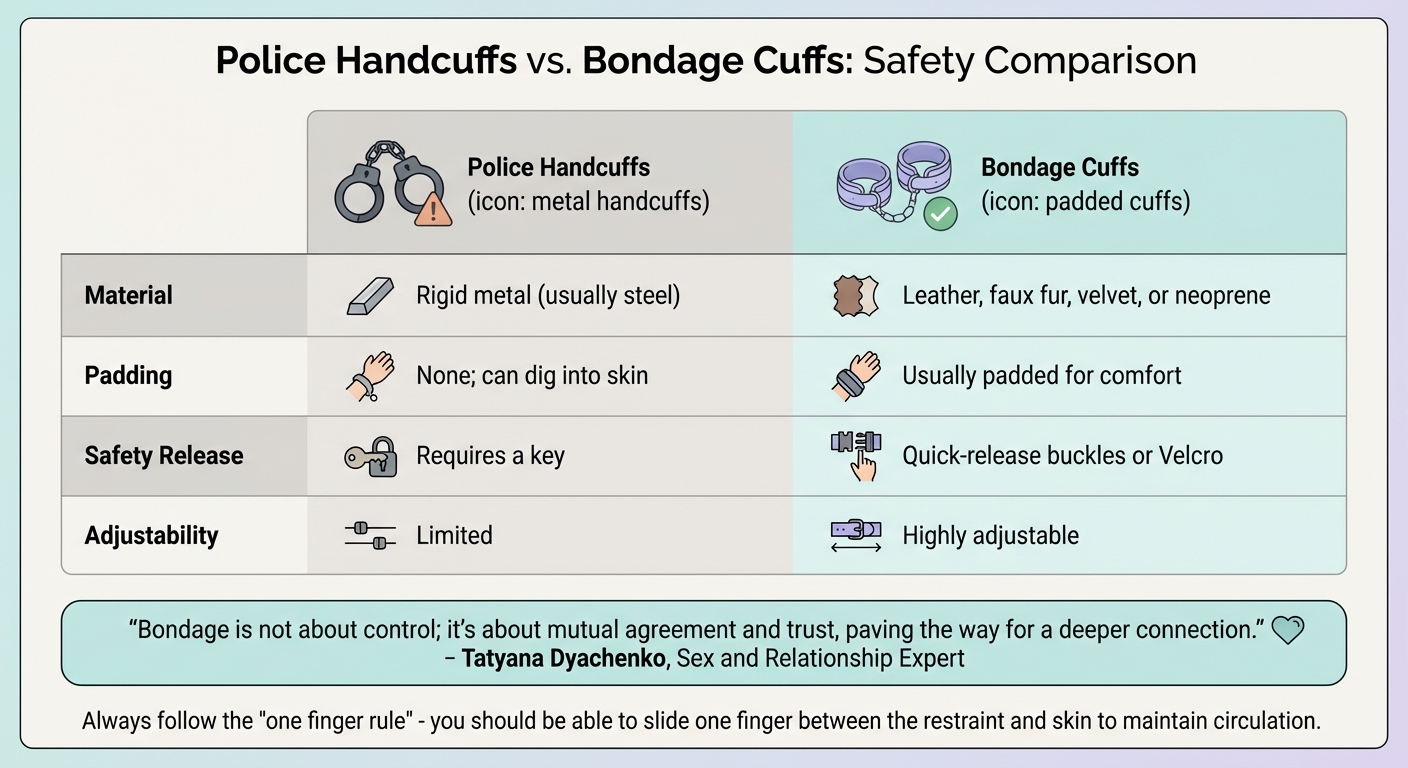
Police Handcuffs vs Bondage Cuffs Safety Comparison Chart
Anticipation brings an entirely new dimension to sensation play, transforming it into a psychological experience. Every pause, every deliberate delay, amplifies the eventual touch. When you slow down and make your partner wait, their mind takes over, building up the intensity of what’s to come. This mental buildup can make even the lightest touch feel electrifying.
The key is pacing. Let silence and pauses do some of the work. For example, after trailing your fingers down your partner's arm, pause for five seconds. This gives their nervous system a moment to react, heightening the sense of anticipation [5].
Teasing and Edging Techniques
Teasing is all about holding back gratification. Instead of immediately delivering on expectations, linger just out of reach. Try switching between body parts or alternating sensations. For instance, you could start with warm breath on the back of their neck and then surprise them with the cool touch of a metal spoon on their collarbone. This contrast keeps their senses on high alert [20][5].
Focus on sensitive areas like the inner arms, wrists, jawline, and outer thighs. Use light, teasing strokes, moving slowly and pausing often. Sound can also play a big role - whisper what you’re about to do or stay silent, leaving them to wonder. Either approach can build tension effectively [5].
To keep everything safe and consensual, use the traffic light system: Green means go, Yellow signals to slow down or check in, and Red means stop immediately [5][7].
Incorporating Light Restraints
Adding restraints introduces a mix of control and vulnerability. When someone’s wrists are gently restrained, their focus shifts entirely to the sensations they’re experiencing, as they can’t instinctively move away or reach out. This disruption of proprioception - the body’s sense of movement and position - intensifies their awareness of touch [22].
Beginners should start with soft materials like padded fabric, velvet, or neoprene cuffs. These are adjustable, gentle on the skin, and less likely to cause discomfort [7][22]. Follow the "one finger" rule to ensure safety: you should be able to slide one finger between the restraint and the skin to maintain circulation [7]. Regularly check that their fingers or toes stay warm and pink.
| Feature | Police Handcuffs | Bondage Cuffs |
|---|---|---|
| Material | Rigid metal (usually steel) | Leather, faux fur, velvet, or neoprene [7] |
| Padding | None; can dig into skin | Usually padded for comfort [7] |
| Safety Release | Requires a key [7][22] | Quick-release buckles or Velcro [7][22] |
| Adjustability | Limited | Highly adjustable [7] |
For first-timers, try restraining only the wrists and keep sessions short - around 15–20 minutes [22][7]. Always have safety scissors nearby for quick release if needed [21][7][22]. Testing the restraint on yourself beforehand is a good way to understand how it feels and works [7].
"Bondage is not about control; it's about mutual agreement and trust, paving the way for a deeper connection." - Tatyana Dyachenko, Sex and Relationship Expert [21]
Similarly, reducing sensory input can make each touch feel even more intense.
Sensory Deprivation
Taking away one sense, like sight or hearing, sharpens the others. When your partner can’t see what’s coming, every touch becomes a surprise. The brain compensates by tuning into other sensations, making touch feel more pronounced and sounds more vivid. Time also seems to stretch, so slow, intentional pauses feel even more dramatic [19][23].
Start with a soft satin or silk blindfold and keep sessions short - around 10–20 minutes - to let your partner’s nervous system adjust [5]. Always maintain physical or verbal contact, and never leave a blindfolded partner alone [19]. Set up a clear stop signal to ensure they can communicate if needed [5].
To deepen the experience, combine the blindfold with noise-canceling headphones playing ambient music or white noise. This creates an even greater sense of isolation, amplifying their reactions to touch [23][2]. Even the act of putting on or removing the blindfold can become a meaningful ritual, marking the start and end of the session and helping your partner transition smoothly in and out of the experience [19].
Combining Temperature, Texture, and Tension
Blending temperature, texture, and tension can create an intense sensory experience. Studies reveal that humans remember about 35% of what they smell, compared to just 5% of what they see [24]. By engaging multiple senses, you can enhance memory and evoke deeper emotional responses [25].
The trick lies in layering these elements gradually. Begin with one or two sensations, adding more as the session progresses. This measured approach avoids overwhelming the senses and encourages a feeling of discovery. Contrasting sensations - like switching between soft and rough textures or alternating warm and cool temperatures - keep the nervous system engaged and responsive [5][6]. These steps help create a session that feels both intentional and immersive.
Creating a Sensory Sequence
To design a sensory experience, start by dimming the lights and playing soft music to establish a calming atmosphere [5][25]. Adding a blindfold can eliminate visual distractions, amplifying tactile sensations [5]. For a dramatic temperature contrast, try gliding an ice cube along your partner's neck, followed by warm breath or a heated towel [5][3].
Next, introduce texture. Begin with something soft, like a feather or silk scarf, then transition to a slightly rougher material, such as lace or a soft-bristled brush [6][25]. To build tension, you might incorporate light restraints, like silk scarves, and use gentle teasing techniques - such as tapping with a soft flogger on areas like the thighs [5][25]. Keep your movements rhythmic and deliberate, focusing on sensitive zones like the neck, jawline, wrists, inner arms, and outer thighs [5]. Always check in and respect agreed-upon boundaries throughout.
Personalizing the Experience
Once you've created a sensory sequence, customize it based on your partner's reactions. Sensory preferences vary widely, so open communication is essential. Discuss boundaries and preferences beforehand to ensure the experience feels safe and enjoyable [5]. After the session, take time for aftercare by discussing what your partner liked most - this feedback can help you fine-tune future experiences [5][3]. For added inspiration, Roma Llama's customizable romance stories can provide creative ideas to frame your session around a particular mood or theme [25].
Conclusion
Sensation play brings couples closer by weaving together elements like temperature, texture, and tension. At its core, the key to a fulfilling experience lies in open communication and mutual consent. As Dr. Celina Criss explains:
Pain never needs to be involved in sensual sensory play...Think gentle touches, delicious flavors, delightful scents, different kinds of light, and beautiful soundtracks [1].
This perspective ensures that the focus remains on enjoyment and connection rather than intensity.
Starting slowly is essential - experiment with just one or two sensations at a time. Keep initial sessions short, around 10–20 minutes, to avoid overwhelming your senses. Always establish and use reliable safe signals [5][7]. Studies show that even brief experiences can increase oxytocin levels and reduce cortisol, while thoughtful aftercare boosts overall satisfaction [8].
Speaking of aftercare, it’s just as vital as the play itself. Use this time to reconnect, share feedback, and care for each other - whether that means talking, cuddling, or simply hydrating together.
The beauty of sensation play lies in its simplicity and adaptability. You don’t need fancy tools; everyday items like ice cubes, silk scarves, or warm towels can create powerful moments. Each session is an opportunity to deepen trust, explore preferences, and strengthen emotional bonds. With clear communication, attentive aftercare, and a willingness to explore, you can craft safe and unforgettable experiences that bring you closer together.
FAQs
How can we bring up sensation play without it feeling awkward?
To ease into sensation play, begin with open and honest communication. Trust and consent are key, so approach the topic as a way to explore intimacy together, focusing on curiosity and shared enjoyment. Present it as a way to deepen your connection, rather than something overwhelming or intimidating. Take time to talk about boundaries, preferences, and desires openly. This helps normalize the discussion and ensures a safe, comfortable environment for trying out new sensory experiences as a team.
What’s the safest way to try hot-and-cold play the first time?
When exploring temperature play, it's essential to start gently and keep communication open with your partner. Use moderate temperatures, such as warm massage oils or cool (not ice-cold) cubes, and always test on a small area first. Regularly check in to ensure your partner feels comfortable and consents to continue. Stay away from extreme temperatures and opt for tools specifically designed for temperature play, like temperature-safe wax or specialized toys. Above all, respect your partner’s boundaries and prioritize their safety and well-being.
What should we do for aftercare once we’re done?
After engaging in sensation play, it's important to focus on aftercare to maintain a sense of safety and connection between partners. This might involve cuddling, sharing words of reassurance, or simply spending quiet time together, especially after experiencing intense sensations or restraint. Take time to talk openly about how each of you felt during the experience - this helps strengthen trust and deepen intimacy. Don't forget to check on each other's physical comfort, offer a drink to stay hydrated, and create a calming space to relax and recover.
Key Takeaways
- 1
sbb-itb-069f7a3
- 2
Temperature play involves using contrasting temperatures to amplify sensations, focusing on areas like the neck, jawline, inner arms, wrists, shoulders, and outer thighs.
- 3
Blending temperature, texture, and tension can create an intense sensory experience.

Written By
Sasha BellroseCertified Intimacy Educator
Sasha Bellrose is a wellness coach and intimacy educator focused on desire mapping and sensory exploration. She helps individuals and couples identify their "intensity levels" and navigate the spectrum of passion with confidence and safety.
View Expert Profile →Keep Reading
Explore Related Stories

The Vendetta
As the heirs to warring crime syndicates, {NAME1} and {NAME2} are forced to share a bulletproof villa during a mandatory truce summit. In the silence of the Sicilian night, their mutual hatred transforms into a violent, high-heat passion. They must navigate their loyalty to their families while surrendering to a physical connection that threatens to burn both their empires to the ground.

The Safehouse Shadow
{NAME1} is a key witness in a federal trial, sequestered in a remote, one-bedroom mountain cabin with {NAME2}, a reclusive enforcer whose methods are as dark as the men hunting her. As a record-breaking blizzard cuts them off from the world, the high-tension atmosphere of the safehouse transforms from a prison into a space of intense, obsessive surrender.
Reference Sources
This article was developed using research and insights from the following clinical and narrative authorities: