Expert Summary
Rushing sex destroys connection—slow eroticism teaches mindful breathing, sensate touch, and pausing to restore pleasure and trust.

The Art of "Slow Eroticism": Why Rushing the Finish Line is a Rookie Mistake
Slow eroticism is about slowing down intimacy to focus on connection, mindfulness, and sensation rather than rushing to climax. Here's why it matters:
- Rushing intimacy harms connection: Treating sex as a race can lead to emotional disconnection, stress, and physical dissatisfaction.
- Slow intimacy builds trust: Techniques like synchronized breathing and mindful touch increase oxytocin ("bonding hormone") and reduce stress.
- Science supports slowing down: Gradual arousal enhances physical pleasure, emotional closeness, and long-term satisfaction.
Practical tips include:
- Breathing together to sync emotionally.
- Sensate focus exercises to enjoy touch without pressure.
- Hugging until relaxed to calm both partners.
- Pausing during intimacy to savor the experience.
Sexual mindfulness: Slowing down, creating connections and improving couple relationships
sbb-itb-069f7a3
What Is Slow Eroticism?
Slow eroticism - often referred to as "slow sex" or "slow loving" - focuses on mindfulness, presence, and deep connection rather than rushing toward orgasm [2][5]. It turns intimacy into a meaningful journey where every sensation, touch, and breath is fully appreciated.
This practice moves intimacy away from a mechanical, goal-driven approach into something deeply felt and experienced. Instead of worrying about performance, partners explore sensations with curiosity, savoring each kiss and touch, which fosters a stronger emotional bond.
The Philosophy Behind Slow Eroticism
At its core, slow eroticism draws heavily from mindfulness principles like "non-striving" and "non-doing." These ideas encourage partners to stay fully present in their bodies without judgment or the pressure to achieve a specific outcome. Techniques such as prolonged eye contact, synchronized breathing, and setting shared intentions help create a connection that goes beyond the physical.
"Slow sex is not about going slower; it's about being present." - Diana Richardson, Author [5]
This mindset treats intimacy as an art form rather than a task. By fostering a safe and non-judgmental environment, couples can explore their connection more deeply, focusing on the sensory experience and emotional vulnerability rather than performance.
Benefits of Slowing Down
The benefits of slow eroticism extend far beyond the bedroom. Mindful touch has been shown to increase oxytocin levels while lowering cortisol, the stress hormone. Physically, allowing arousal to build naturally enhances blood flow and heightens sensitivity throughout the body - not just in the genitals.
Research supports these benefits, too. Couples who practice sexual mindfulness often report more consistent orgasms and improved relationship satisfaction. A 2023 study published in the Journal of Positive Psychology even found that "mindful slowing" contributes to better emotional regulation and greater overall life satisfaction [5].
Next, we’ll explore how rushing through intimacy can diminish these enriching experiences.
Why Rushing the Finish Line Is a Rookie Mistake
Taking things slow during intimacy deepens connection, while rushing can strip away both physical pleasure and emotional closeness. When the focus shifts to reaching orgasm quickly, the experience becomes more about checking off a box than enjoying a shared moment. This shift can have serious effects on your body, mind, and relationship [1][2].
How Rushing Affects Relationships
Approaching intimacy like a task list often leads to emotional disconnection, leaving both partners unsatisfied. When intimacy feels rushed, it can turn into a mechanical, uninspired routine [5][3]. Think of it like fast food: it might satisfy a quick craving, but it doesn’t provide the nourishment your emotional bond needs.
This performance-driven mindset can also create anxiety. Instead of focusing on mutual enjoyment, couples may feel pressure to achieve specific outcomes [7]. That anxiety can show up physically through issues like erectile dysfunction or premature ejaculation, and emotionally as avoidance. Over time, some partners may start avoiding intimacy altogether to escape feelings of failure or discomfort [7]. Studies show that 10% to 20% of married couples have sex fewer than 10 times a year, often because high-pressure encounters make intimacy feel more stressful than enjoyable [7].
"Sex should be fun, not stressful - performance pressure can lead to anxiety, avoidance, and bad sex." - Tasha Seiter MS, PhD, LMFT [7]
Rushing intimacy also creates a "dopamine hangover." When you race to climax, your brain experiences a quick dopamine spike followed by a sharp drop. This rollercoaster can leave partners feeling emotionally distant and disconnected [1]. Over time, poor communication and a lack of trust can develop, as the hurried nature of these moments undermines the vulnerability that intimacy should foster [4][3].
The Science of Slow: Oxytocin and Arousal
Science highlights the stark difference between rushed and unhurried intimacy. Fast, goal-driven sex relies on dopamine, a neurotransmitter that provides intense but short-lived highs. The downside? After orgasm, dopamine levels drop significantly, especially in men, often leading to irritability and emotional strain [1]. Over time, this approach can desensitize dopamine receptors, making it harder to feel pleasure without increasingly intense stimulation - a phenomenon sometimes referred to as sexual burnout [1].
"Frequent orgasms can drive the dopamine rollercoaster: spikes, crashes, and relationship stress." - Max & Jasmin Muzio, Founders of The Making Love Retreat [1]
On the other hand, slowing down taps into a different system. Taking your time during intimacy encourages the release of oxytocin, often called the bonding hormone. Oxytocin promotes trust, emotional safety, and long-term attraction. Slower, more mindful touch not only boosts oxytocin but also lowers cortisol, the stress hormone [5]. Research from the Kinsey Institute shows that couples who embrace slower, more connected intimacy report greater satisfaction and improved communication [5].
Physically, slowing down allows your body to respond naturally. Blood flow increases gradually, natural lubrication improves, and muscles relax. Even light touches become more noticeable and pleasurable as your nervous system shifts into a receptive state [4][2]. By engaging the parasympathetic nervous system - specifically the vagus nerve - slow intimacy leaves you feeling refreshed and fulfilled rather than drained [1].
The difference is clear: rushing keeps your body in a high-stress, fight-or-flight mode, while slowing down fosters relaxation and connection. One approach treats intimacy as a task to complete; the other transforms it into a shared, meaningful experience.
Practical Techniques to Master Slow Eroticism
When intimacy becomes rushed, it can feel disconnected and mechanical. Slow eroticism flips the script, turning intimacy into a meaningful journey of connection and sensory awareness. Here are some practical ways to bring this approach into your relationships.
Synchronized Breathing for Connection
Start by sitting or lying face-to-face with your partner, close enough to feel connected. Close your eyes and focus on your breathing. After a moment or two, slow your breath: inhale for a count of four, pause briefly, and exhale for a count of six. Invite your partner to match this rhythm. As you continue, explore slight changes - like taking deeper inhales to heighten touch awareness or longer exhales to let go of tension [8]. This shared breathing sets the stage for deeper connection and mindful touch.
Sensate Focus Touch Exercises
Sensate focus, introduced by William H. Masters and Virginia E. Johnson in the 1960s, is all about shifting attention from performance to the pure joy of touch. It’s a step-by-step process that starts with non-genital touching and gradually moves toward more intimate contact.
Set aside 30 to 90 minutes in a calm, private space. Begin with gentle stretching to release tension, then engage in eye contact to build vulnerability. Before touching, share three things you appreciate about each other and how you’re feeling in the moment. Then, take turns being the "toucher" and the "receiver", spending about 15 minutes in each role. As the receiver, focus on the sensations - like texture, temperature, and pressure - without worrying about how you’re responding. The toucher, on the other hand, stays curious about their partner’s reactions, using subtle hand movements for non-verbal feedback. In the beginning stages, avoid kissing or genital contact to break old patterns and allow desire to grow naturally.
Cindy Michel, M.A., LMFT, CST, explains, "Sensate Focus is essentially applied mindfulness for touch, training the brain to focus on sensation and different types of touch rather than worry."
Mindfulness-based practices like this have been shown to reduce sexual distress and increase desire. For instance, a 2018 BBC study involving 2,066 adults in the UK found that stress was the leading factor negatively affecting sex lives [9].
The Hugging 'Til Relaxed Technique
Dr. David Schnarch developed this technique to encourage both physical relaxation and emotional closeness. It’s simple: stand facing your partner in a private, comfortable space and embrace firmly but gently. Let your bodies relax into one another, focusing on your shared breath. The goal isn’t to hold the hug for a specific amount of time but to stay in it until you can feel your tension begin to melt away. This practice promotes coregulation, helping both partners feel calmer and more secure.
"Sometimes the problem isn't your communication. It's that your nervous systems never get a chance to settle down together." - Dr. Lori Davis, Clinical Sexologist
This exercise can bring up a mix of emotions - laughter, awkwardness, even tears - as buried feelings come to the surface. These reactions are all part of the process, helping you and your partner connect on a deeper level.
Slow Conscious Lovemaking Practices
Once you’ve built a foundation with synchronized breathing, mindful touch, and emotional presence, you can bring these elements into your intimate moments. Pause often to make eye contact, keeping the connection alive beyond physical sensations. Sync your breathing with your partner’s or rest your hand on their chest to feel their heartbeat. If you notice yourself rushing toward climax, take a deliberate pause. This intentional slowing turns intimacy into a shared experience, enhancing pleasure while reducing stress and strengthening emotional bonds.
Using Roma Llama to Inspire Slow Eroticism

Once you've tried techniques like synchronized breathing, sensate focus, and conscious touch, you might wonder how to keep that spark alive. Roma Llama offers a creative solution: personalized romance stories tailored to your preferences. This approach takes mindful techniques and turns them into a fun, daily practice.
Personalized Romance Stories for Inspiration
Roma Llama's storytelling feature allows you to create narratives that reflect the essence of slow eroticism. You can customize every detail - adjust the spice level, choose the setting, and define character traits. Want a story that focuses on tender moments like gentle touches and lingering eye contact? Opt for a milder spice level. Prefer something that delves into sensory play or edging? Dial up the intensity. You can set the scene in a candlelit bedroom, on a moonlit beach, or wherever sparks your imagination. Even the characters can be tailored to reflect you and your partner, incorporating elements like mindful breathing or unique personality traits.
These stories do more than entertain - they provide vivid examples of slow eroticism in action. Picture scenes where partners share prolonged touch, sync their breathing, or build anticipation with whispered words. Reading these stories together helps you and your partner develop a shared erotic language. It’s a way to explore techniques such as sensate focus or extended foreplay without any pressure, turning the stories into a form of mental foreplay. They encourage you both to slow down and fully savor every moment.
Simple and Hassle-Free Story Sharing
Roma Llama also makes it easy to share these personalized narratives. With its e-card feature, you can create a custom romance story and send it directly to your partner via email or text - no subscriptions or logins required. For just $4.99, you can craft a story, preview it, and include a personal note like, "For our slow night ahead."
Sending a story ahead of time - whether hours or days before you meet - builds anticipation, a cornerstone of slow eroticism. Imagining the touch, breath, and connection described in the story primes both partners emotionally and physically, creating a heightened sense of intimacy before anything even begins. It’s a simple, low-pressure way to communicate your desires and set the tone for a deeper, more connected experience.
Common Rushing Mistakes and How to Fix Them
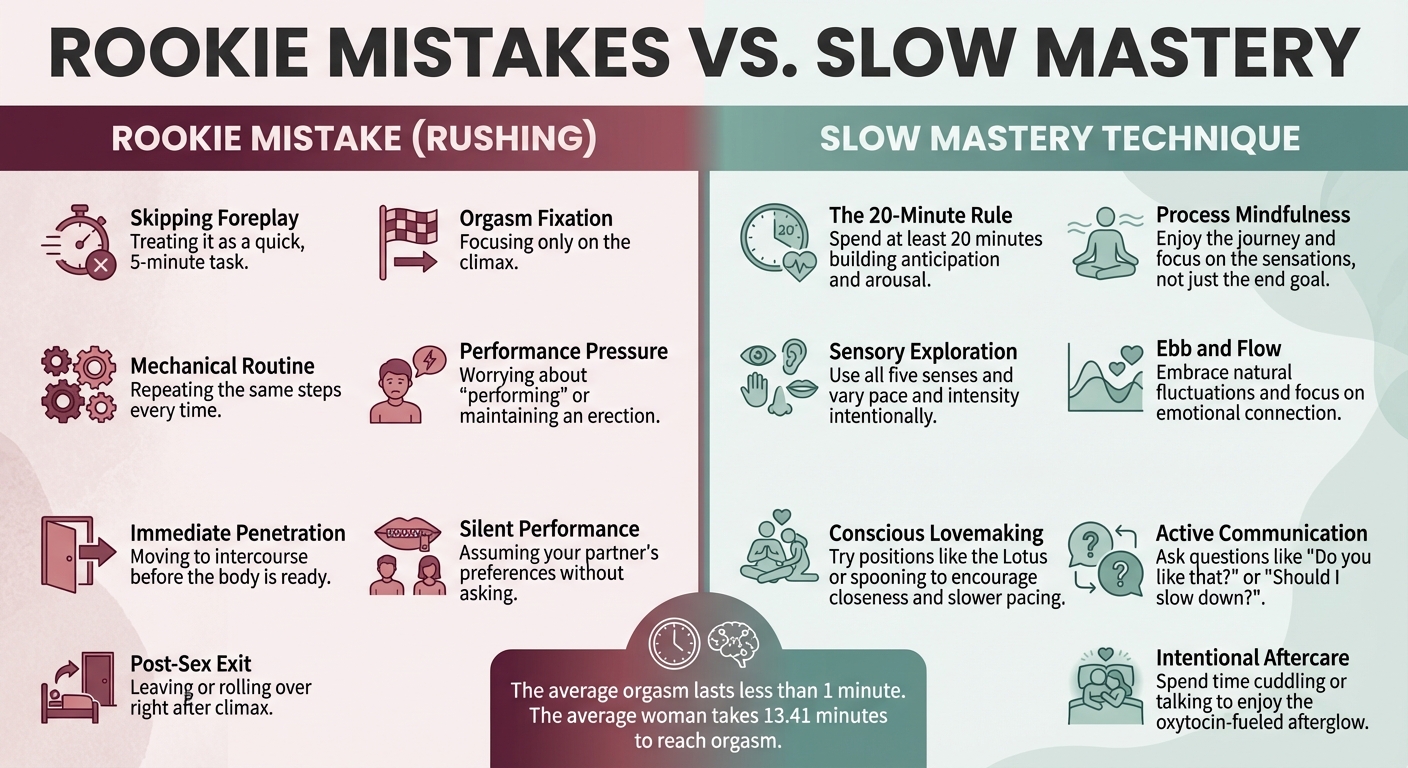
Rushing vs Slow Mastery in Intimacy: Common Mistakes and Solutions
Many couples unintentionally rush through intimacy, focusing on speed instead of connection. Over time, this can lead to emotional distance or physical dissatisfaction. The good news? Recognizing these patterns is the first step toward creating deeper, more fulfilling experiences.
One common mistake is treating sex like a race - chasing the orgasm as the ultimate goal. This mindset not only adds unnecessary pressure but also misses the point that the average orgasm lasts less than a minute [11][3]. As Shadeen Francis, a licensed marriage and family therapist, puts it:
"The average orgasm is less than a minute long. Why use all of your time chasing 1 minute?" [13]
Another frequent misstep is skipping foreplay. Research shows it takes the average woman about 13.41 minutes to reach orgasm [12]. Rushing through this essential phase often leads to disconnection or even discomfort. Recognizing these pitfalls paves the way for adopting slower, more intentional approaches to intimacy.
Table: Rookie Mistakes vs. Slow Mastery
Here’s a quick comparison of common rushing habits and their slow-focused alternatives:
| Rookie Mistake (Rushing) | Slow Mastery Technique |
|---|---|
| Skipping Foreplay: Treating it as a quick, 5-minute task [10]. | The 20-Minute Rule: Spend at least 20 minutes building anticipation and arousal [10][11]. |
| Orgasm Fixation: Focusing only on the climax [11][3]. | Process Mindfulness: Enjoy the journey and focus on the sensations, not just the end goal [11]. |
| Mechanical Routine: Repeating the same steps every time [3]. | Sensory Exploration: Use all five senses and vary pace and intensity intentionally [10][12]. |
| Performance Pressure: Worrying about "performing" or maintaining an erection [2][3]. | Ebb and Flow: Embrace natural fluctuations and focus on emotional connection [3]. |
| Immediate Penetration: Moving to intercourse before the body is ready [10][3]. | Conscious Lovemaking: Try positions like the Lotus or spooning to encourage closeness and slower pacing [2]. |
| Silent Performance: Assuming your partner's preferences without asking [10][11]. | Active Communication: Ask questions like "Do you like that?" or "Should I slow down?" [11]. |
| Post-Sex Exit: Leaving or rolling over right after climax [11][12]. | Intentional Aftercare: Spend time cuddling or talking to enjoy the oxytocin-fueled afterglow [11][12]. |
Shifting away from these rushing habits starts with small, deliberate changes. If arousal builds too quickly, slow things down or experiment with gentler touches [10]. Engage all your senses - pay attention to what you see, hear, taste, smell, and feel [12]. And most importantly, communicate openly with your partner instead of assuming they know what feels good. These steps can transform rushed encounters into meaningful, connected experiences.
Conclusion
The heart of slow eroticism lies in shifting the focus from performance to being present. By stepping away from the rush toward orgasm and embracing mindful practices like synchronized breathing, sensory exploration, and emotional connection, couples can foster deeper trust and more satisfying intimacy.
Research highlights the role of oxytocin in creating enduring emotional bonds, moving intimacy beyond fleeting moments of pleasure [1]. This approach not only alleviates performance anxiety but also engages the parasympathetic nervous system, enhancing arousal and transforming intimacy into a shared, meditative experience [4][6].
Start small - try synchronized breathing or have an open conversation about what feels good. Gradually, these mindful changes can transform hurried encounters into meaningful moments that nurture both partners.
For an added touch, consider Roma Llama's personalized romance stories. At just $4.99, these customizable tales can help set the mood, sparking anticipation and encouraging open dialogue about desires. By weaving these stories into your routine, the transition from daily life to intentional connection can feel natural and unhurried. Let these practices guide you toward a more conscious and connected intimacy.
FAQs
How do we start slow eroticism without feeling awkward?
To ease into a slower, more intimate experience, start by creating a relaxed and present atmosphere. Begin with some deep breaths together to cultivate a sense of calm and connection. From there, explore sensual touch exercises, such as gentle caresses or massages, to build comfort and closeness. Open and honest communication about your intentions can help reduce any awkwardness and foster trust. The focus here isn't on rushing or achieving anything specific - it's about connecting and enjoying the shared journey.
What if one of us wants to go faster than the other?
If one partner prefers a quicker pace, honest communication becomes essential. Talking openly about desires and boundaries ensures both partners feel respected and heard. Building a stronger connection can involve playful activities like teasing, flirting, or exploring sensual touch together. If the desire for speed stems from excitement, share those emotions and work toward a middle ground. With patience and empathy, you can find a rhythm that strengthens your bond and enhances the experience for both of you.
How can Roma Llama stories help us slow down in real life?
Roma Llama stories promote mindfulness and emotional connection, aligning with the ideas behind slow eroticism. They encourage readers to truly savor moments, pay attention to the finer details, and connect deeply with their emotions. This approach helps cultivate a more present and relaxed state of mind. By focusing on emotional closeness and heightened sensory awareness, these stories guide individuals to slow down, cherish the process, and bring patience and intention into their everyday experiences.
Key Takeaways
- 1
sbb-itb-069f7a3
- 2
When intimacy becomes rushed, it can feel disconnected and mechanical.
- 3
Rushing vs Slow Mastery in Intimacy: Common Mistakes and Solutions

Written By
Sasha BellroseCertified Intimacy Educator
Sasha Bellrose is a wellness coach and intimacy educator focused on desire mapping and sensory exploration. She helps individuals and couples identify their "intensity levels" and navigate the spectrum of passion with confidence and safety.
View Expert Profile →Keep Reading
Explore Related Stories

The Vendetta
As the heirs to warring crime syndicates, {NAME1} and {NAME2} are forced to share a bulletproof villa during a mandatory truce summit. In the silence of the Sicilian night, their mutual hatred transforms into a violent, high-heat passion. They must navigate their loyalty to their families while surrendering to a physical connection that threatens to burn both their empires to the ground.

The Safehouse Shadow
{NAME1} is a key witness in a federal trial, sequestered in a remote, one-bedroom mountain cabin with {NAME2}, a reclusive enforcer whose methods are as dark as the men hunting her. As a record-breaking blizzard cuts them off from the world, the high-tension atmosphere of the safehouse transforms from a prison into a space of intense, obsessive surrender.
Reference Sources
This article was developed using research and insights from the following clinical and narrative authorities: