Expert Summary
Learn how isolation reshaped attachment patterns, how to identify your style (secure, anxious, avoidant, disorganized), and steps to reconnect.

Attachment Theory 2.0: Identifying Your Style in a Post-Isolation World
Attachment theory explains how early caregiver relationships shape how you connect with others as an adult. There are four main attachment styles:
- Secure: Comfortable with intimacy and independence.
- Anxious: Fears abandonment, seeks constant reassurance.
- Avoidant: Values independence, avoids emotional closeness.
- Disorganized: Craves connection but fears intimacy.
Periods of isolation, like during the COVID-19 pandemic, amplified these patterns. For example, anxious individuals became more reliant on reassurance, while avoidant types withdrew further. Recognizing your attachment style is key to improving relationships. Ask yourself questions like, “How do I react when someone doesn’t text back?” or “What do I feel when my partner is quiet?”
Attachment styles can evolve with effort. Strategies like open communication, setting boundaries, and practicing vulnerability can help. Tools like self-assessments and therapy can also provide clarity. Remember, your attachment style isn’t permanent - growth is always possible.
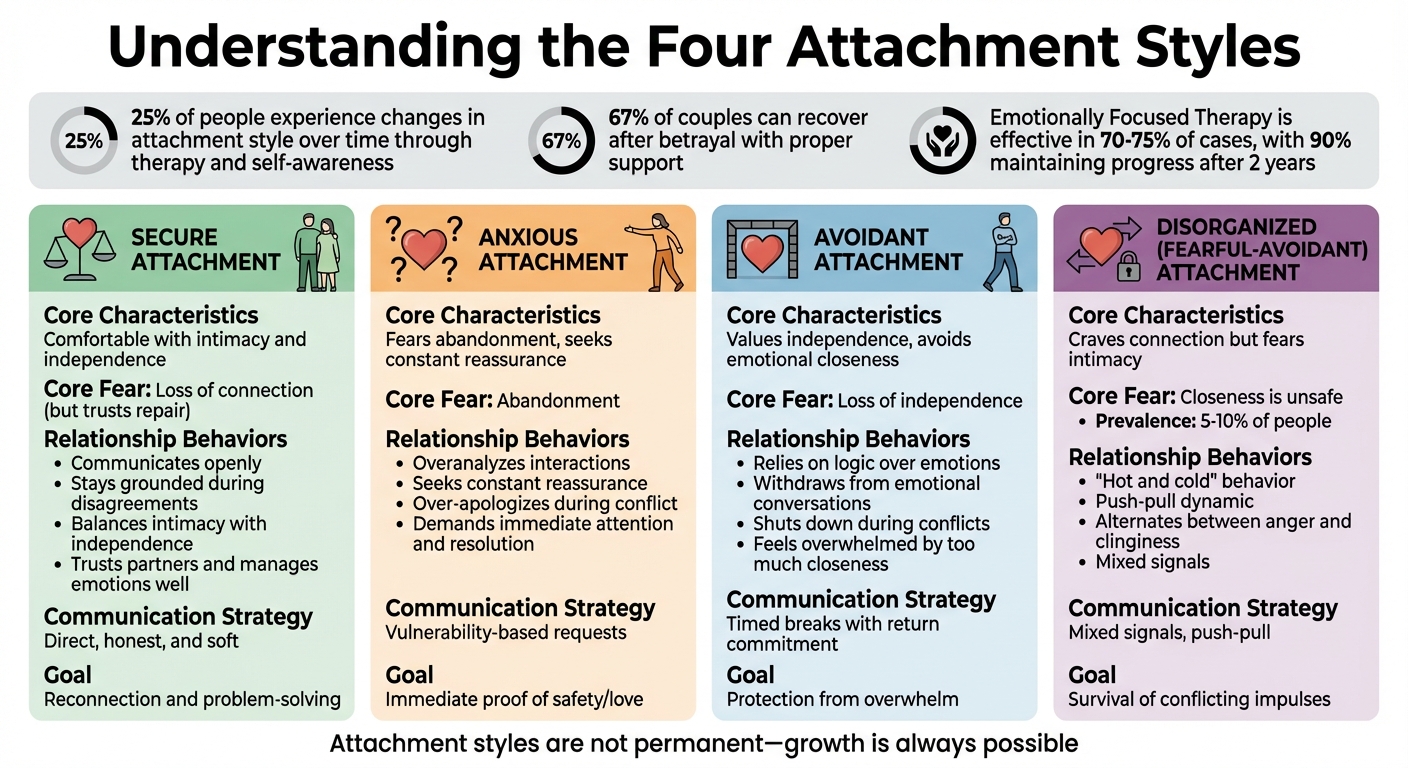
Four Attachment Styles: Behaviors, Fears, and Communication Strategies
How to Identify Your Attachment Style
Questions to Ask Yourself
In today’s world, understanding how you naturally respond to stress is key to building healthier connections. Identifying your attachment style requires looking at how you react in challenging situations rather than in calm ones. As relationship expert Sara Carmen puts it:
Attachment is most visible when you're stressed, not when life is calm [3].
Start by asking yourself: How do I react when someone doesn’t text back? If you find yourself spiraling into worst-case scenarios, that’s a sign of anxious attachment. If you simply shrug it off, you might lean toward avoidant tendencies. And if you briefly wonder but don’t dwell on it, you likely fall into the secure attachment category [6].
Another useful question is: What do I feel when my partner is unusually quiet? Anxious individuals often seek constant reassurance, asking, “Are we okay?” Avoidant types, on the other hand, may feel relief in the silence and avoid analyzing it. Those with a disorganized attachment style, however, might feel torn - wanting connection while simultaneously fearing it [2].
Also, think about your biggest relationship worry. If abandonment is your primary fear, you might have an anxious attachment style. If losing your independence feels more threatening, you could be avoidant. Secure individuals may worry about disconnection but trust in their ability to resolve issues [6].
How Each Attachment Style Shows Up in Relationships
Attachment styles strongly influence how we behave, especially during conflict or when there’s emotional distance. Here’s how each style tends to appear:
- Secure: Those with a secure attachment style handle stress well, even in difficult times. They communicate openly, stay grounded during disagreements, and balance intimacy with independence effortlessly [4]. They trust their partners and manage emotions without shutting down or overreacting.
- Anxious: Anxious attachers often fear abandonment and overanalyze interactions, like obsessing over texts or seeking constant reassurance [2]. During conflict, they might over-apologize or demand immediate attention and resolution [4].
- Avoidant: Avoidant individuals tend to rely on logic over emotions and may withdraw from emotional conversations. They often shut down during conflicts, feel overwhelmed by too much closeness, and prefer solving problems on their own [6][7]. Their reserved communication style can sometimes come across as distant or detached.
- Disorganized (Fearful-Avoidant): This style combines a strong desire for connection with a fear of intimacy, creating a push-pull dynamic. It often results in “hot and cold” behavior, where someone alternates between anger and clinginess during conflict. Disorganized attachment is the least common, affecting about 5% to 10% of people [4][5][9].
Self-Assessment Tools and When to Seek Help
The ECR-RS (Experiences in Close Relationships, Relationship Structures) questionnaire is a reliable tool for measuring attachment-related anxiety and avoidance across different types of relationships [3]. One popular attachment quiz, validated with over 1.2 million participants from 50+ countries, boasts a 94% test-retest reliability rate [9].
When using these tools, it’s important to focus on patterns across multiple relationships rather than isolated moments or a single negative experience [10]. Since attachment styles are most evident in romantic relationships, base your responses on those dynamics.
If your attachment patterns cause distress, disrupt daily life, or stem from unresolved trauma, seeking professional help can be a game-changer [3][2]. Therapies like Emotionally Focused Therapy (EFT) and trauma-informed counseling are particularly effective for addressing attachment-related issues [8]. And remember, attachment styles aren’t set in stone - about 25% of people experience changes in their style over time through therapy, self-awareness, and consistent practice of healthier behaviors [10].
sbb-itb-069f7a3
Managing Relationships Based on Your Attachment Style
Maintaining a Secure Attachment Style
Even those with secure attachment styles can face challenges, especially after periods of isolation. The key to navigating these is staying consistent while being mindful of your partner's emotional triggers. Keep expressing your feelings openly, but don’t take on the role of the sole emotional regulator in the relationship. As attachment therapist Stan Tatkin puts it:
People who pretend they don't have needs are often the neediest of all [11]
It's important to protect your boundaries by avoiding the urge to overcompensate for an insecure partner. Instead, model healthy communication by clearly stating your needs and assuming positive intent during conflicts. When disagreements arise, treat them as opportunities for growth - this works best when both partners are willing to engage constructively.
For those with less secure attachment patterns, specific strategies can help bridge the gap toward better communication.
Working with Anxious or Avoidant Patterns
Stress tends to intensify attachment behaviors, and post-isolation periods can make clear communication even more essential.
For individuals with anxious tendencies, it’s helpful to replace indirect or protest-like behaviors with straightforward “I” statements. For instance, instead of hinting, say something like, “I feel lonely and would love some quality time this weekend.” Before tackling tough conversations, try calming techniques like grounding exercises or journaling to manage anxiety. If you need reassurance, ask for it clearly, such as, “I’m feeling insecure; can you remind me what you love about me?”
Avoidant individuals, on the other hand, should focus on staying present in emotional situations. If you feel overwhelmed, communicate your need for space while setting a clear return time: “I need 20 minutes to gather my thoughts, but I promise we’ll finish this conversation.” Sharing small, daily emotional insights - often called micro-vulnerabilities - can help build intimacy. Additionally, making an effort to focus on your partner’s positive traits can counteract the urge to withdraw.
When Partners Have Different Attachment Styles
When partners have differing attachment styles, instinctive reactions can often create friction. For example, anxious-avoidant pairings are particularly prone to conflict. The pattern is predictable: the anxious partner seeks closeness, while the avoidant partner feels smothered and pulls away, which only increases the anxious partner’s pursuit. Breaking this cycle requires both individuals to adjust their natural responses.
To navigate these differences, focused communication strategies can help:
- Anxious partners should aim to speak from a place of vulnerability rather than reacting out of anxiety.
- Avoidant partners benefit from openly sharing their internal experiences instead of shutting down.
- If direct emotional conversations feel overwhelming, consider discussing relationship topics during a walk or drive, which can feel less intense.
- Regular weekly check-ins at a calm, predictable time can help address small issues before they escalate. Use these moments to reflect on what’s working and identify one area to improve.
| Attachment Style | Core Fear | Communication Strategy | Goal |
|---|---|---|---|
| Secure | Loss of connection (but trusts repair) | Direct, honest, and soft | Reconnection and problem-solving |
| Anxious | Abandonment | Vulnerability-based requests | Immediate proof of safety/love |
| Avoidant | Loss of independence | Timed breaks with return commitment | Protection from overwhelm |
| Disorganized | Closeness is unsafe | Mixed signals, push-pull | Survival of conflicting impulses |
Tools for Reconnecting After Isolation
Rebuilding Trust and Emotional Safety
Rebuilding trust doesn’t happen overnight - it’s about consistently showing up in small, meaningful ways. Dr. John Gottman refers to these as "sliding door" moments, those everyday opportunities to demonstrate care and reliability [12]. Research suggests that 67% of couples can recover after a betrayal if they have the right support. However, it requires time and intentional effort [13].
One helpful approach is the "Atone, Attune, Attach" framework, which offers a structured path to healing [13]. A great place to start is with a Daily Check-In. This simple practice takes just 5–10 minutes: each partner shares one external stressor (unrelated to the relationship), something they’re grateful for, and one need for the next day [13]. This routine builds predictability, which can be especially comforting for individuals with anxious attachment styles who seek reassurance.
Physical connection also plays a key role. Try the Four-Minute Eye Gazing exercise - sit close, knee-to-knee, and maintain silent eye contact for four minutes. This practice helps release oxytocin, reduces stress, and creates a sense of emotional safety [13][14]. Follow this with a 15-Minute Cuddle, keeping it non-sexual to lower cortisol levels and rebuild physical safety without pressure [13][14]. These timed activities can be particularly beneficial for avoidant partners, as they provide clear boundaries while still fostering closeness.
Once these habits are in place, storytelling can offer another creative and meaningful way to deepen intimacy.
Using Personalized Stories to Build Intimacy
Storytelling offers a unique way to reconnect, especially for avoidant attachment styles who might feel overwhelmed by intense emotional discussions [2][4][15].
Platforms like Roma Llama allow couples to co-create personalized romance stories, customizing everything from character details to the level of intimacy. For anxious partners, this provides an outlet to channel their needs into clear expressions of desire, such as saying, "I feel safe when you hold me", rather than resorting to behaviors like panic-texting [3][15].
This storytelling approach can also help break the Pursue-Withdraw Loop that often traps anxious-avoidant pairings [2][15]. It offers structured reassurance for the anxious partner while giving the avoidant partner a way to share their feelings without the fear of being overwhelmed. At just $4.99 per story, couples can start small by sharing these stories as e-cards - no subscription or login required [website].
Building Connection Through Shared Rituals
To complement physical and narrative reconnection, shared rituals can create a foundation of emotional safety. Rituals differ from routines - they’re repetitive actions imbued with intention and meaning [16]. After periods of isolation, these rituals become "anchor points", providing security for anxious partners and clear boundaries for avoidant ones [17][15].
Simple rituals like greeting each other warmly, saying goodbye intentionally, or creating predictable return-time routines can foster meaningful connections [17][15]. Another idea is a Stress-Reducing Conversation, where each partner shares external stressors while the other listens without offering solutions. This only takes 10 minutes a day but can significantly strengthen emotional safety over time [18].
For avoidant partners, these rituals can replace vague distancing with clear commitments, such as saying, "I need 30 minutes to myself, but I’ll be back at 8:30 to continue this conversation" [3][15]. This approach reassures anxious partners while respecting the avoidant partner’s need for space. You could also try Digital Detox Rituals, like phone-free date nights, to ensure undivided attention [16][17]. Research shows that Emotionally Focused Therapy, which emphasizes such rituals, is effective in 70-75% of cases, with 90% of couples maintaining progress even two years later [18].
Conclusion: Moving Forward with Your Attachment Style
What to Remember About Your Attachment Style
Your attachment style isn’t a diagnosis - it’s more like a guide to understanding how you react during stressful situations [19][4]. Recognizing these patterns gives you the chance to step in and break the cycle [3]. While most people fall into the secure attachment category, those who don’t aren’t stuck in place [2]. These patterns are flexible and can evolve into what psychologists call "earned security" with consistent effort [4][2].
"Attachment styles are not destiny - they're learned patterns. And anything learned can be unlearned, healed, and reshaped." - Insight & Action Therapy [4]
Interestingly, around 50% of major life events - like the isolation many faced recently - can trigger immediate shifts in attachment behaviors. However, only about 25% of those changes stick [1]. What makes the difference? It’s all about how you interpret those experiences. For instance, if you see reconnecting after isolation as a chance to grow instead of something to fear, you’re more likely to make lasting progress toward a secure attachment style [1].
With this knowledge, you’re better equipped to adjust your responses and create healthier, more fulfilling relationships.
Building Deeper Connections Moving Forward
Now that you’ve uncovered your attachment style, it’s time to turn that understanding into action. Focus on naming specific behaviors rather than labeling yourself: for example, instead of saying, "I’m avoidant", try, "When I feel distant, I tend to shut down to protect myself" [3]. This shift from identity to action makes real change possible. One helpful strategy is practicing "opposite action": if you lean avoidant, try sharing your feelings; if you’re more anxious, take a moment to self-soothe before reaching out [19].
Clear communication is another game-changer. Instead of dropping hints, make direct requests: "I’m feeling unsure - could you let me know we’re okay?" [3]. If you need space, offer a clear plan for reconnecting: "I need 30 minutes to cool off, but let’s pick this back up at 8:30" [3]. These small but intentional steps help establish the three key elements of a strong relationship: accessibility (being emotionally present), responsiveness (offering kindness during tough moments), and engagement (valuing your partner deeply) [19].
"Love is the best survival mechanism there is." - Dr. Sue Johnson [3]
The 4 Main Attachment Styles in Relationships (+ The Attachment Theory)
FAQs
Can my attachment style be different with different people?
Yes, your attachment style can shift depending on the person you're interacting with. Attachment tendencies are not set in stone - they exist on a spectrum and are influenced by your past experiences and current relationships. It's common for people to exhibit traits from more than one attachment style, with certain behaviors or dynamics bringing out different aspects. In short, your attachment style can evolve and respond to the unique dynamics of each relationship.
How can I tell stress apart from my attachment style?
Understanding how your attachment style influences your response to stress can provide valuable insight. For example, if you lean toward an avoidant style, you might notice feelings of detachment or emotional numbness under stress. On the other hand, those with an anxious attachment style may find themselves seeking constant reassurance or experiencing intense worry.
Take a moment to reflect on your patterns. Do you tend to pull away and isolate yourself (avoidant), or do you rely heavily on others for support (anxious)? Being aware of these behaviors can help you determine whether your reactions are rooted in stress or tied to your attachment style. This awareness is a key step toward understanding yourself better.
What should I do if my partner and I trigger each other?
Understanding how attachment styles shape your behavior can be a game-changer in resolving recurring conflicts. These patterns, often formed during childhood, play a big role in how you react during disagreements. Whether your style is anxious, avoidant, or secure, recognizing these tendencies can offer valuable insight into your relationship dynamics.
The key is self-awareness. Pair that with open communication and a commitment to creating a safe space where both partners feel comfortable being vulnerable. If certain triggers keep cropping up, it might be worth consulting a therapist who specializes in attachment-based methods. They can help guide you toward healthier responses and build a stronger foundation of trust.
Key Takeaways
- 1
In today’s world, understanding how you naturally respond to stress is key to building healthier connections.
- 2
Rebuilding trust doesn’t happen overnight - it’s about consistently showing up in small, meaningful ways.

Written By
Dr. Elena VancePh.D. in Clinical Psychology
Dr. Elena Vance is a clinical psychologist with over 12 years of experience helping couples navigate the complexities of long-term partnership. Her research focuses on how attachment styles influence digital communication and intimacy in the modern age. She is the author of "The Secure Heart: Navigating Love in a Digital World."
View Expert Profile →Keep Reading
Explore Related Stories

The Rival Chefs
Chef {NAME1} and rival {NAME2} are forced to share a tiny kitchen for a charity event. As they fight over counter space and ingredients, their professional bickering turns into an intense physical hunger.

The Slice of Life Arrangement
{NAME1} and her reclusive neighbor {NAME2} enter into a fake relationship to solve their social problems. As they navigate family events and quiet dinners, their 'arrangement' turns into a real, heartwarming passion.
Reference Sources
This article was developed using research and insights from the following clinical and narrative authorities: