Expert Summary
Explore pros and cons of situationships vs traditional relationships—commitment, communication, emotional risks, and tips for setting boundaries.

Is "Situationship" the New Normal? The Pros and Cons of Undefined Relationships
Situationships are undefined relationships that lack labels, commitment, and clear expectations. They're becoming increasingly common, especially among younger generations, with over 60% of young adults experiencing them and #situationship amassing 335 million TikTok views. While they offer flexibility and freedom, they often come with emotional uncertainty and inconsistent communication.
Key Takeaways:
- Situationships: No labels, focus on the present, less pressure but more ambiguity.
- Traditional Relationships: Clear labels, emotional security, and future planning but require more commitment.
- Pros of Situationships: Freedom, low pressure, and flexibility.
- Cons of Situationships: Emotional imbalance, lack of clarity, and potential self-esteem issues.
The choice depends on your priorities - whether you value freedom or crave clarity and commitment. Honest communication and self-reflection are essential to navigate either dynamic successfully.
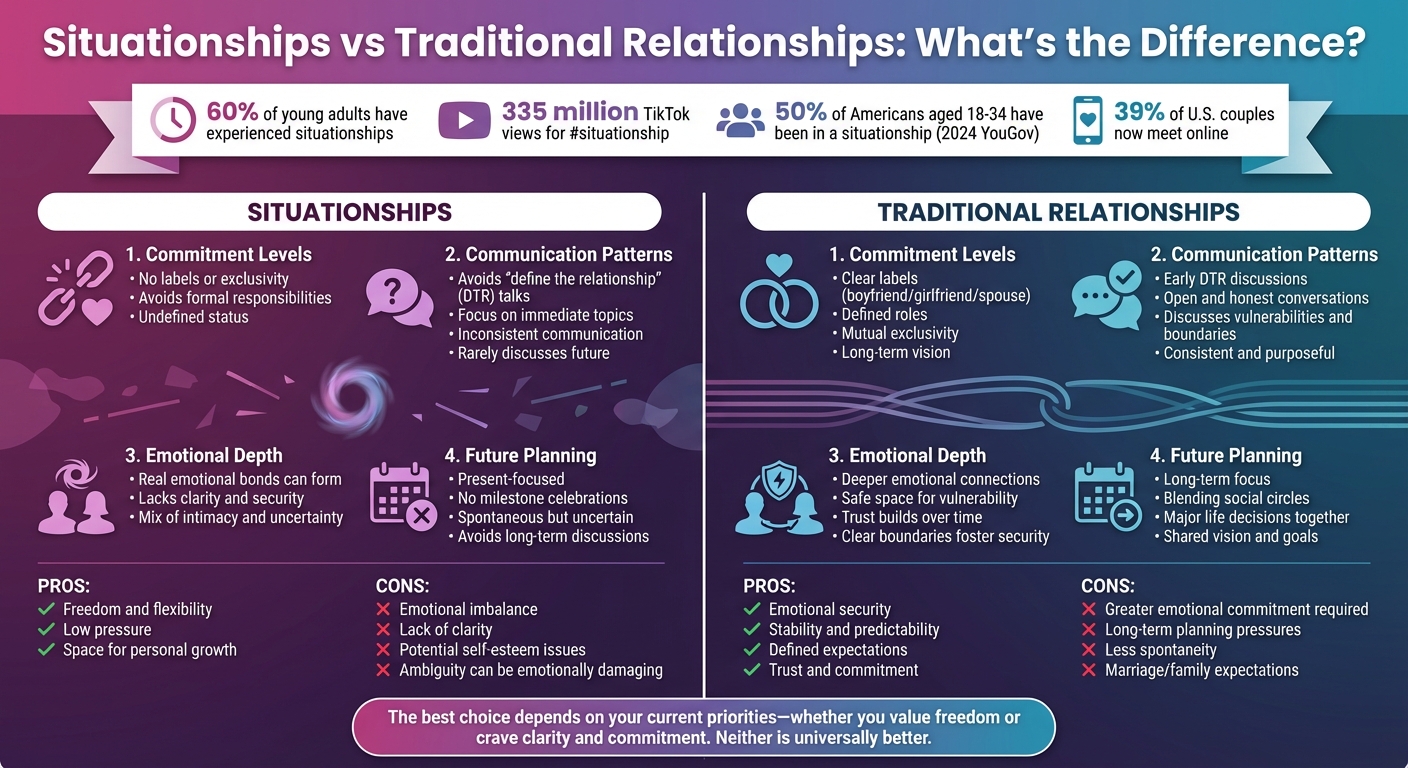
Situationships vs Traditional Relationships: Key Differences Compared
1. Situationships
Commitment Levels
Situationships are marked by a deliberate lack of commitment, labels, and exclusivity, steering clear of the responsibilities that come with a defined relationship [7]. When commitment enters the picture, the dynamic shifts into a more traditional relationship [6]. In contrast to situationships, traditional relationships come with clear labels - like boyfriend, girlfriend, or spouse - which signal an intention to nurture and sustain the partnership over time [6]. This absence of formal commitment also shapes how partners interact and communicate.
Communication Patterns
Ambiguity is the hallmark of communication in a situationship. People in these arrangements often avoid having the "define the relationship" (DTR) talk [1]. While they might exchange daily texts or share moments of intimacy, they rarely discuss what the relationship means or where it’s heading. Conversations tend to revolve around immediate topics - like tonight’s plans or how the day went - while deeper discussions about exclusivity or the future are often sidestepped [4]. This can lead to inconsistent communication, leaving one or both parties unsure of their standing. Still, even in this undefined space, genuine emotional connections can develop.
Emotional Depth
Even without formal labels, situationships can foster real emotional bonds. These connections, while meaningful, exist without the clarity or security that defined relationships offer. This mix of intimacy and uncertainty is a key factor in understanding the modern allure - and potential pitfalls - of situationships.
Future Planning
One of the defining traits of situationships is their focus on the present. Future-oriented plans, like introducing each other to friends, celebrating milestones, or envisioning a shared life, are often absent. This emphasis on spontaneity can feel liberating but also creates uncertainty, especially when one person starts seeking a deeper commitment [1][4]. While the lack of long-term pressure can be appealing, it might also prevent individuals from pursuing relationships that align better with their personal aspirations [4].
2. Traditional Relationships
Commitment Levels
Traditional relationships often revolve around a formal sense of commitment, with both partners embracing clearly defined roles and a shared vision for their future [1]. This mutual understanding provides a sense of security and stability, laying the groundwork for exclusivity and long-term goals, such as marriage. With this foundation in place, communication becomes more intentional and focused, helping the relationship grow in a meaningful direction.
Communication Patterns
Having clear roles can encourage consistent and purposeful communication. In traditional relationships, partners tend to engage in open and honest conversations early on, including defining the relationship (DTR) discussions. These talks often go beyond surface-level topics, touching on vulnerabilities, boundaries, and past experiences. As relationship therapist Sarah Breen, LCSW, explains:
"But for it to be healthy, you [need] to have conversations to make sure you're on the same page" [3].
This kind of proactive communication helps partners stay aligned and address potential issues before they become major problems.
Emotional Depth
The structure and security of traditional relationships often allow for deeper emotional connections to flourish. Clearly defined boundaries and mutual expectations create a safe space for vulnerability, fostering trust over time. This emotional depth strengthens the bond between partners, enabling them to navigate challenges together and celebrate significant milestones as a team.
Future Planning
One of the defining features of traditional relationships is their focus on the future. Couples frequently plan for the long term, from blending social circles to making major life decisions. This shared vision not only enhances their connection but also brings a sense of stability and reduces uncertainty. Working together toward common goals helps guide daily decisions and strengthens their commitment to building a lasting partnership.
Relationship Advice Are situationships slowly replacing romantic relationships
sbb-itb-069f7a3
Pros and Cons
Deciding between a situationship and a traditional relationship can significantly impact your emotional health, daily life, and future plans. Each option has its own benefits and challenges, shaping your experiences in different ways.
Situationships provide the freedom to explore connections without the weight of a long-term commitment. This can be appealing if you're prioritizing personal growth or still figuring out what you want in a relationship. Psychologist and author Dr. Ramani Durvasula explains:
"Situationships often mimic the features of a relationship without any security or commitment. This ambiguity can be emotionally damaging, especially for people who value clarity and consistency."
However, the lack of clear boundaries can lead to emotional struggles, especially if one person develops deeper feelings while the other stays emotionally detached. This imbalance can take a toll on self-esteem.
On the other hand, traditional relationships offer emotional security, stability, and defined expectations. These qualities create a sense of predictability and trust. But they also require a greater emotional commitment and may bring pressures related to long-term planning, such as marriage or starting a family. Relationship expert and therapist Dr. Kimberly Moffit cautions:
"Ultimately, if this person is not looking for the same things as you are, you will end up disappointed and it can take a toll on your mental health and your self esteem."
The decision ultimately depends on what matters most to you right now - whether you value the freedom and unpredictability of a situationship or the clarity and commitment of a traditional relationship. Neither option is universally better; the best choice aligns with your current priorities, emotional needs, and future aspirations. These differences provide the foundation for understanding how to navigate your relationship choices effectively.
Conclusion
Situationships are becoming a hallmark of modern dating. According to a 2024 YouGov poll, half of Americans aged 18 to 34 have experienced being in a situationship [3]. This trend mirrors broader societal shifts - dating apps have made connecting with others more accessible, with 39% of U.S. couples now meeting online [5]. Additionally, greater financial independence and a growing emphasis on personal growth are reshaping traditional relationship timelines.
Relationship expert Dr. Kimberly Moffit sheds light on this evolving dynamic:
"We're seeing the rise of situationships because people are getting to their late 20s, 30s, and 40s, without being in long-term relationships, and I think that's actually a really great thing. It's more empowering. And it leaves room for a lot of dynamics that fall in between super early dating and marriage." [5]
To navigate a situationship successfully, honest communication is key. Be upfront about your needs, ask direct questions like, "What are we to each other?" and establish clear boundaries [2]. These boundaries might include exclusivity, how often you communicate, or what you expect from the relationship. Defining these aspects can help avoid misunderstandings.
It's equally important to check in with yourself regularly. Are you comfortable with the arrangement, or are you hoping for something more? Consider how the lack of clarity might be affecting your emotional health. If you're prioritizing career ambitions or personal growth, a situationship might align with your current goals. On the other hand, if you're seeking commitment and stability, the ambiguity of a situationship could stand in the way of achieving that.
Ultimately, there’s no one-size-fits-all answer. The best choice is the one that fits your current stage in life. Be honest with yourself and your partner, and don’t hesitate to walk away if the relationship dynamic no longer aligns with your goals.
FAQs
How do I know if a situationship is right for me?
If you're wondering whether a situationship is right for you, the first step is to take an honest look at your emotional needs and what you're looking for in a relationship. Are you okay with the ambiguity that comes with an undefined connection? Does it align with what you genuinely want, or are you hoping for something more structured?
The next essential step is open communication. Have a candid conversation with the other person about your expectations and boundaries. If you realize that a situationship leaves you feeling unfulfilled or lacking the stability you need, it may be a sign that this type of arrangement isn't what you're looking for.
How can you manage your emotions while in a situationship?
Maintaining emotional balance in a situationship begins with clear and open communication. Be upfront about your feelings, intentions, and boundaries to minimize the risk of misunderstandings.
Take time to regularly reflect on how the relationship makes you feel. Ask yourself if it aligns with your needs and values. If it’s bringing more stress than happiness, it might be worth reconsidering or even stepping away. Your emotional well-being should always come first.
How do I know if it’s time to move from a situationship to a committed relationship?
If you’re starting to feel a stronger emotional connection, unsure about your relationship's direction, or noticing that your emotional needs aren’t being fulfilled, it might be time to think about moving toward a more defined relationship. Take a moment to reflect on what you truly want for the future and have an honest conversation with your partner about your intentions and goals.
Consider whether your current setup matches your values and priorities. If it feels out of sync, discussing where you both stand could provide clarity and help determine the best path forward.
Key Takeaways
- 1
Situationships are marked by a deliberate lack of commitment, labels, and exclusivity, steering clear of the responsibilities that come with a defined relationship [7].
- 2
sbb-itb-069f7a3
- 3
Deciding between a situationship and a traditional relationship can significantly impact your emotional health, daily life, and future plans.

Written By
Dr. Elena VancePh.D. in Clinical Psychology
Dr. Elena Vance is a clinical psychologist with over 12 years of experience helping couples navigate the complexities of long-term partnership. Her research focuses on how attachment styles influence digital communication and intimacy in the modern age. She is the author of "The Secure Heart: Navigating Love in a Digital World."
View Expert Profile →Keep Reading
Explore Related Stories

The Rival Chefs
Chef {NAME1} and rival {NAME2} are forced to share a tiny kitchen for a charity event. As they fight over counter space and ingredients, their professional bickering turns into an intense physical hunger.

The Slice of Life Arrangement
{NAME1} and her reclusive neighbor {NAME2} enter into a fake relationship to solve their social problems. As they navigate family events and quiet dinners, their 'arrangement' turns into a real, heartwarming passion.
Reference Sources
This article was developed using research and insights from the following clinical and narrative authorities: