Expert Summary
Why second marriages fail and how to beat the odds: address past baggage, improve communication, rebuild trust, and manage blended families.

The Statistics of Second Marriages: Why They Fail (and How to Beat the Odds)
Second marriages are more likely to end in divorce than first marriages. About 60-67% of second marriages in the U.S. fail, compared to 41-50% of first marriages. Third marriages fare even worse, with a 73-74% failure rate. These numbers reflect the unique challenges remarried couples face, such as financial stress, emotional baggage, and the complexities of blended families.
To succeed in your second marriage, focus on these key strategies:
- Address past issues: Resolve emotional baggage and unhealthy patterns carried over from previous relationships.
- Improve communication: Use "I" statements, repair attempts, and active listening to prevent misunderstandings.
- Rebuild trust and intimacy: Create small, meaningful moments of connection and vulnerability.
- Plan for blended family dynamics: Take a thoughtful approach to stepparenting and family roles.
While challenges are common, couples who prioritize communication, trust, and shared goals can build lasting relationships.
Why 64% Of Second Marriages End In Divorce… (And Why Yours Doesn’t Have To) | Rachael Sloan
sbb-itb-069f7a3
Second Marriage Statistics: What the Data Shows
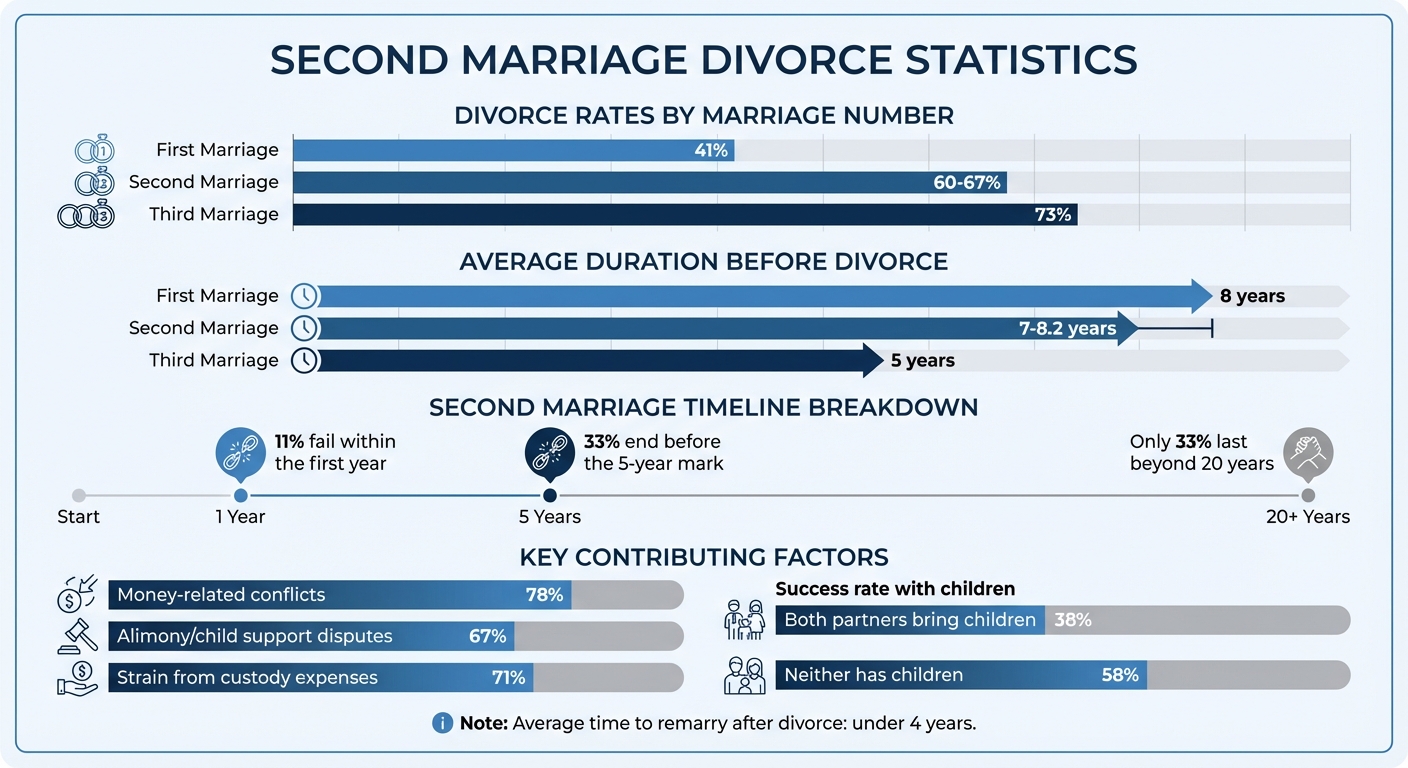
Second Marriage Divorce Statistics: Rates by Marriage Number and Duration
Divorce Rates by Marriage Number
In the U.S., 41% of first marriages end in divorce [9][10]. The numbers climb for subsequent marriages: 60% to 67% of second marriages fail [9][10][11], and 73% of third marriages end in divorce [9][10][11].
Looking at timelines, the data paints a stark picture. 11% of second marriages fail within the first year, and 33% end before the five-year mark [9]. For those hoping for long-term success, only 33% of second marriages last beyond 20 years [9].
| Marriage Order | Estimated Divorce Rate | Average Duration Before Divorce |
|---|---|---|
| First Marriage | 41% [9][10] | 8 years [10][11] |
| Second Marriage | 60–67% [9][10] | 7–8.2 years [9][10] |
| Third Marriage | 73% [9][10][11] | 5 years [10] |
These statistics highlight the unique challenges faced by second marriages, setting the stage for deeper insights into why these unions are more vulnerable.
Why Second Marriages Fail More Often
The higher failure rate of second marriages can be traced to several challenges. Financial stress is a major factor, with 78% of couples reporting money-related conflicts [9]. Disputes over alimony and child support from previous relationships affect 67% of second-marriage couples, while 71% report added strain from custody-related expenses [9].
Blended families add another layer of complexity. Attorney Thomas Fighter from Fighter Law explains:
"Second and third marriages face more complexity: blended families, tighter finances, and unresolved conflict from prior relationships. Those pressures are why second marriages fail about 60–67% of the time" [10].
When children from previous relationships are involved, the odds of success drop further. Marriages where both partners bring children into the union have a 38% success rate, compared to 58% when neither partner has children from prior relationships [9].
Psychological factors also play a role. Having already experienced divorce, many individuals develop a lower tolerance for staying in an unhappy marriage. Knowing they can recover from divorce makes leaving feel like a manageable option rather than a devastating event [12][1]. This familiarity with the process, while empowering in some ways, can undermine the stability of the marriage when difficulties arise.
Emotional Baggage and Repeating Past Mistakes
Carrying Over Unhealthy Patterns
Unresolved emotions and habits from a previous marriage can create hurdles in new relationships. Take Kayla, for example. Her lingering distrust from past experiences led her to misinterpret Jake's punctuality, sparking unfounded accusations despite his consistent loyalty. This kind of emotional baggage often fosters toxic cycles that weaken intimacy and trust [2]. As relationship expert Dr. John Gottman puts it:
"Life tends to go better for those who have the courage to trust others" [2].
Another pitfall is choosing a new partner as a reaction to past control or pain. While it might feel like a fresh start, unresolved issues often resurface later [4][6]. On average, people wait just under four years to remarry after a divorce [3]. This might not provide enough time to fully process the emotional aftermath or break free from lingering patterns.
Fear of vulnerability adds another layer of complexity. After experiencing heartbreak, many people instinctively guard their emotions, which can block the deeper connections second marriages require. Dr. Brené Brown explains this dynamic well:
"Vulnerability is uncertainty, risk, and emotional exposure... the act of loving someone and allowing them to love you may be the ultimate risk" [2].
When combined with personal baggage, the challenges of remarriage can become even more pronounced, especially in the context of blended families.
Managing Blended Family Challenges
Blended families often bring unique challenges to second marriages. About 42% of people entering remarriage bring one or more children into the new relationship [5]. This can create an "insider/outsider" dynamic, where one parent shares a deep history with their children, leaving the new spouse feeling like an outsider [6][13]. While children can strengthen the bond in a first marriage, in remarriages, stepfamily conflicts and loyalty struggles can strain the relationship [3].
Consider Will and Marie. Their blended family experienced ongoing tensions until they developed effective repair strategies [5]. Licensed therapist Terry Gaspard emphasizes the importance of taking a thoughtful approach to stepparenting:
"The role of the stepparent is one of an adult friend, mentor, and supporter rather than a disciplinarian" [2].
If a stepparent tries to enforce discipline too quickly, it can spark loyalty conflicts, with stepchildren viewing them as an outsider trying to replace their biological parent [2][6]. These tensions can ripple through the family, placing significant pressure on the marriage.
Better Communication: The Foundation of Second Marriage Success
Common Communication Problems
Communication issues in second marriages often stem from unresolved patterns carried over from previous relationships. Emotional baggage can resurface unexpectedly, with certain tones or phrases triggering memories of past conflicts. This can lead to reactions based on old wounds rather than the present situation [14][2].
Another challenge is making assumptions. People may expect their new spouse to instinctively understand their needs or boundaries because a previous partner did. When this doesn’t happen, disappointment and unmet expectations can follow [14][16]. For blended families, tensions around stepparenting and differing parenting styles add another layer of complexity to communication [5][14][3].
Financial stress is another common hurdle. Obligations like child support, alimony, or lingering debts can make discussions tense [5][16]. The Gottman Institute identifies the "Four Horsemen" - criticism, defensiveness, contempt, and stonewalling - as major predictors of relationship breakdowns [15]. Warning signs include frequent misunderstandings, negative body language (like crossed arms), passive-aggressive remarks, and emotional overwhelm, also known as "flooding" [15]. Recognizing these behaviors early can help couples address them before they become entrenched.
Understanding these potential pitfalls is the first step toward building healthier communication habits.
How to Communicate More Effectively
Improving communication in a second marriage requires intentional effort and practical strategies. Research shows that 69% of marital problems are ongoing, meaning success depends on how couples handle conflicts rather than resolving them completely [2][7]. Happy couples, for example, maintain a 5:1 ratio of positive to negative interactions during disagreements [2][7].
One effective method is starting difficult conversations with "softened start-ups" that use "I" statements. Instead of saying, "You never stick to our spending plan", try, "I feel worried about our budget." This approach minimizes defensiveness and encourages constructive dialogue [5][2]. Dr. John Gottman highlights the importance of repair attempts, explaining:
"A repair attempt is any statement or action – verbal, physical, or otherwise – intended to diffuse negativity and keep a conflict from escalating" [5].
Simple gestures like a light touch, a well-timed joke, or a sincere apology can de-escalate tension and keep conversations on track [5].
Active listening is another powerful tool. Make eye contact, nod, and reflect back what your partner says to show you’re truly engaged. This can turn disagreements into opportunities for collaboration [15][5]. Scheduling regular check-ins - like weekly alone time or monthly "money talks" - can also help address small issues before they grow into larger problems [5][2].
Emotional attunement is key. Pay attention to your partner’s bids for connection - those small but meaningful moments when they seek your attention or support. Responding positively to these bids strengthens your bond over time [5][2]. As the Gottman Institute Editorial Team puts it:
"It's important to remember that every gesture and word impact your relationship" [15].
For couples dealing with the complexities of blended families or lingering challenges from past relationships, premarital or remarital counseling can be a game-changer. Studies show it can improve the chances of success by 30% [8]. A counselor can help identify unhealthy patterns and provide tools tailored to the unique dynamics of a second marriage [14][3].
Rebuilding Intimacy: Emotional and Physical Connection
Using Personalized Romance Stories to Reconnect
Strengthening intimacy often requires more than just improved communication - it thrives on shared, creative experiences. After a divorce, many individuals put up emotional barriers to shield themselves from potential pain [2][8]. While this self-protection feels instinctive, it can also block the vulnerability essential for deep connections. Engaging in safe, playful activities together can help lower these defenses.
One creative way to reconnect is through Roma Llama's erotic stories. For just $4.99, couples can explore personalized romance tales that serve as a fun, low-pressure way to reignite passion. These stories allow you to adjust the spice level, choose unique settings, and even design characters that mirror your relationship. Sharing these as e-cards can be a delightful surprise for your partner, making the experience both personal and effortless. This process becomes a "ritual of connection", sparking intimate conversations, exploring desires, and rediscovering one another in a relaxed, enjoyable way [18][19].
Studies highlight the importance of responding to each other's bids for connection - those small gestures seeking attention or affection. These moments are a strong predictor of relationship satisfaction [2][5]. By engaging in this shared creative activity, couples not only reignite their passion but also lay a foundation for rebuilding trust, which is the next critical step.
Creating Trust and Emotional Safety
Once passion has been rekindled, the focus shifts to rebuilding trust - a process that takes time, especially when past betrayals linger [4][8]. Rebuilding trust begins with small, everyday acts of vulnerability, gradually addressing deeper issues [2].
Start by identifying and sharing your emotional triggers. For example, if a dismissive tone reminds you of past arguments and makes you withdraw, explain this to your partner. Such honesty helps prevent misunderstandings and ensures that past pain doesn’t interfere with your current relationship [4][8]. This gradual approach to vulnerability encourages mutual understanding and support, creating a safer emotional space.
Physical rituals can also play a role in restoring trust. Something as simple as a daily "six-second kiss" can reinforce your connection and show that the relationship is a priority [2]. In blended families, where challenges like loyalty conflicts or parenting dynamics arise, experts recommend stepparents take on an "adult friend" role initially, rather than stepping into disciplinary duties right away [2]. Research suggests it can take up to four years for remarried couples to find their rhythm [5], so patience and consistent effort are essential.
Conclusion
Main Strategies for Second Marriage Success
Second marriages can thrive when past issues are addressed, and communication becomes a priority. While second marriages often face higher divorce rates, understanding the reasons behind these challenges can help lay a foundation for success. The path forward involves a few key steps: confront emotional baggage from your first marriage by recognizing unhealthy habits and triggers that might resurface in your new relationship [17]. Make your partner your top priority - even above children or extended family obligations [5]. Strengthen communication by using "soft start-ups" with "I" statements instead of blaming "you" statements, and practice repair attempts to resolve conflicts before they spiral [5]. Building intimacy through consistent moments of connection and vulnerability is equally important, as it allows trust to develop gradually.
It's worth noting that handling disagreements effectively is more impactful than trying to avoid them altogether. Research shows that 69% of marital conflicts remain unresolved even in happy marriages [8]. Additionally, premarital counseling can improve your chances of success by 30% [17], making it a valuable step for couples looking to start strong. These strategies offer a practical guide to fostering a healthy, lasting relationship.
Taking Action in Your Relationship
Turning these strategies into action requires deliberate effort. Carve out 2–3 hours each week for quality time together, and schedule monthly financial discussions to address one of the most common sources of tension [5].
You might also try creative approaches to rekindle passion. For example, Roma Llama offers personalized romance stories for just $4.99, which can be a fun and low-pressure way to explore desires and create shared memories. Professional counseling is another powerful tool for developing better communication habits and addressing lingering wounds from the past [20].
Patience and intentionality are key to a thriving second marriage. Research suggests it can take up to four years for remarried couples to find their rhythm [5]. As Dr. John Gottman wisely points out:
"Life tends to go better for those who have the courage to trust others" [2].
Rebuilding trust and keeping communication open are essential steps. Start small - whether it’s planning a date night, sharing a vulnerable feeling, or experimenting with new ways to connect - and commit to nurturing a strong and resilient partnership.
FAQs
What are the biggest predictors of divorce in second marriages?
Unresolved trust issues or lingering unhealthy patterns from past relationships often play a big role in predicting divorce in second marriages. Another common challenge is blending families, which can lead to loyalty conflicts or tension among family members. On top of that, differing views on important topics - like finances, parenting approaches, or how household responsibilities should be divided - can add extra strain if these issues aren’t tackled early and constructively.
How can we handle money fights tied to alimony, child support, or debt?
Handling financial disagreements in second marriages calls for honest communication and thoughtful planning. It's essential to address topics like alimony, child support, and asset division from previous marriages as early as possible. These conversations can prevent misunderstandings and set the stage for a more harmonious relationship.
Legal tools, such as prenuptial agreements, can also play a key role. They help outline financial expectations clearly and protect the interests of both partners. By having proactive and transparent discussions, couples can minimize potential conflicts and work toward a stronger financial partnership.
What’s the best way to set stepparent roles without causing loyalty conflicts?
To navigate stepparent roles without sparking loyalty conflicts, it’s important to approach the situation with care and intentionality. Start by setting clear boundaries and having open, honest conversations about everyone's roles early on. Focus on being a supportive figure rather than trying to replace a biological parent. This distinction helps ease tensions and avoids feelings of rivalry.
Equally important is avoiding favoritism or taking sides. Instead, work together as a family to create shared expectations that everyone can agree on. Building trust takes time - sometimes years - so patience is your greatest ally in creating a stable and harmonious dynamic.
Finally, prioritize emotional safety. Understanding the past experiences of everyone involved can help you approach challenges with empathy and compassion, laying the foundation for a stronger family connection over time.
Key Takeaways
- 1
sbb-itb-069f7a3
- 2
Unresolved emotions and habits from a previous marriage can create hurdles in new relationships.
- 3
Strengthening intimacy often requires more than just improved communication - it thrives on shared, creative experiences.

Written By
Dr. Julian ChenCognitive Scientist
Dr. Julian Chen is a researcher studying the neurobiology of love and the impact of advanced technology on human emotional connection. His work explores how expertly-crafted personalized content can serve as a catalyst for real-world intimacy and self-expansion.
View Expert Profile →Keep Reading
Why "Happily Ever After" Is A Myth (And What's Actually Better)
Read Article →The #1 Thing Couples Fight About (And It's Not What You Think)
Read Article →Monogamy on Trial: A Look at the Data Behind Lifelong Partnerships
Read Article →Decoding the 'Relationship Slump' and How to Pull Yours Out of It
Read Article →Explore Related Stories

The Rival Chefs
Chef {NAME1} and rival {NAME2} are forced to share a tiny kitchen for a charity event. As they fight over counter space and ingredients, their professional bickering turns into an intense physical hunger.

The Slice of Life Arrangement
{NAME1} and her reclusive neighbor {NAME2} enter into a fake relationship to solve their social problems. As they navigate family events and quiet dinners, their 'arrangement' turns into a real, heartwarming passion.
Reference Sources
This article was developed using research and insights from the following clinical and narrative authorities: