Expert Summary
In 2026, swipe fatigue, low success rates, and superficial matching are driving users to ditch dating apps and seek human, offline connections.

Algorithm vs. Intuition: Why 2026 is the Year People are Deleting Dating Apps for Good
In 2026, people are ditching dating apps in record numbers. Why? Burnout, dissatisfaction, and a craving for deeper connections have pushed singles to seek alternatives. Dating apps, once hailed as convenient, are now criticized for prioritizing endless swiping over real relationships. Key issues include:
- Low success rates: Fewer than 10% of users find long-term relationships.
- Burnout: Over 70% of Gen Z singles feel exhausted by the process.
- Superficiality: Decisions are mostly based on photos, leaving emotional depth behind.
- Inequality: Top profiles dominate attention, leaving others overlooked.
Instead, people are turning to offline, human-centered methods like matchmaking, in-person events, and platforms like Roma Llama, which focus on storytelling to build emotional closeness. This shift reflects a growing rejection of algorithms in favor of intuitive, face-to-face connections.
Quick Takeaway: Dating apps are losing their appeal as users prioritize meaningful interactions and emotional depth over endless swiping.
The Downsides of Algorithm-Driven Dating
The Problem with Algorithmic Matchmaking
Dating apps might claim to help you find love, but their real goal is to keep you swiping. As Nick Rosen, founder of Met By Nick, bluntly states, "Every successful relationship is a lost customer" [1]. This creates a tricky situation: the app thrives when you stay single and engaged with their platform, not when you find a partner and delete your account.
These platforms work a lot like slot machines. They’re designed to deliver quick dopamine hits, making the act of swiping addictive [7]. Yet, the odds of finding a long-term relationship through these apps are slim, with success rates under 10% [1]. Meanwhile, companies like Match Group are raking in billions - $3.4 billion in annual revenue in 2024 alone - largely from users paying for features like visibility "boosts" to overcome algorithmic hurdles [4].
It’s also a deeply superficial system. Research shows that 90% of decisions are based on photos, leaving personality-focused bios with little influence [6]. And the inequality is staggering: the top 1% of men receive 16% of all likes, while the bottom 50% get just 4.3%. The dating app landscape has a Gini coefficient of 0.58, making it more unequal than 95.1% of countries worldwide [6]. These flaws lead many users to feel disillusioned and burnt out.
The Rise of "Dating App Fatigue"
Burnout is rampant among dating app users. Studies reveal that 78% to 80% of users experience exhaustion from the process [8]. This fatigue is especially pronounced among younger generations, with 80% of Millennials and 79% of Gen Z reporting burnout from online dating [9]. For many, this signals a loss of trust in the system.
One major culprit is the "optionality trap." The illusion of endless choices leaves users paralyzed, always thinking the perfect match might be just one swipe away. Research supports this: as users scroll through more profiles, their likelihood of accepting matches drops by 27% [3]. As Aziz Ansari, author of Modern Romance, puts it, "When you have infinite options, you have no options. You are paralyzed by the fear that the perfect person is just one swipe away" [6].
The process itself is draining. Swipe, match, exchange a few uninspired messages, and repeat. This cycle has led to frustration with what many describe as a "toxic swiping culture." In June 2025, Bumble responded to this consumer dissatisfaction by cutting 30% of its global workforce [9]. This constant cycle of disappointment doesn’t just wear people out - it erodes the ability to form genuine emotional connections.
How Algorithms Undermine Emotional Intimacy
While algorithms can mimic the conditions for connection, they can’t create real emotional bonds. Dating apps often train users to see potential partners as disposable, reducing people to profiles that can be judged and discarded in seconds [4][6][2]. The "infinite scroll" design encourages this mindset, turning what should be meaningful connections into quick, transactional decisions.
This approach stifles intimacy before it even begins. Dates increasingly feel like job interviews, with a focus on metrics like social status. Ghosting - reported by 72% of users - is just one example of how these behaviors play out [6]. The shift from in-person interactions to editable, asynchronous messaging has also made it easier for users to exhibit low-accountability behaviors [6]. As neuroscience enthusiast Sharvani puts it, "The system was never meant to help you find meaningful relationships, only to keep you looking" [5].
The mental toll is undeniable. The unpredictability of ghosting, breadcrumbing, and flaking creates stress and emotional fatigue. Users often develop habits of rejection, scanning profiles for reasons to say "no" rather than looking for connections [6][2]. This leads to an environment filled with surface-level interactions, leaving people emotionally drained before they even go on a date. It’s no wonder many are abandoning algorithm-driven dating in favor of more organic, human-centered ways to connect.
sbb-itb-069f7a3
The Rise of Intuition: A Return to Human-Centered Connections
What Intuition Offers That Algorithms Can't
A new wave of dating is emerging - one that prioritizes intuition and personal connection over algorithms. Unlike data-driven systems, intuition captures the presence, energy, and emotional nuance of interactions. It’s about noticing how someone listens, the warmth in their voice, or the feeling they bring into a room. As writer Sadman Sakib Ayon aptly puts it:
"Human beings do not fall in love because of perfect sorting algorithms. They fall in love because of moments that escape prediction" [4].
This shift moves away from the endless pursuit of the "perfect" match that apps encourage, focusing instead on building genuine connections with real people [3]. Human matchmakers and friends bring something algorithms simply can't: the ability to assess shared values and chemistry. These qualities, impossible to quantify, often lead to more successful and satisfying relationships compared to app-based matches [1].
The numbers reflect this changing mindset. By early 2026, 90% of users on relationship-focused platforms stated they were seeking serious commitment or marriage [10]. Meanwhile, Meetup reported a 19% global increase in in-person social events between 2024 and 2025, as people sought alternatives to the "marketplace of strangers" created by dating apps [4]. As researcher Georges Abi-Heila points out, real connection depends on elements that "cannot be ranked, predicted, or scaled" [6].
2026 Trends: Offline and Personalized Approaches
This intuitive approach mirrors a broader trend of moving away from digital, algorithm-driven interactions. The Luddite Dating movement is gaining traction. For example, in early 2026, Berlin-based analog dance nights banned phones at the door, creating spaces for genuine connection without the distractions of technology [4]. Similarly, Kanso hosted phone-free social gatherings in San Diego in 2025, where attendees placed their devices in sealed pouches to focus entirely on face-to-face interaction [4]. These events address a growing desire for unfiltered, authentic experiences.
Another trend reshaping the dating landscape is "Storybooking" - a concept where singles embrace slow-burn connections and romantic tropes inspired by period dramas like Bridgerton. Bumble’s sexologist Chantelle Otten notes:
"Singles are consciously choosing romance on their own terms and [are] clear on their boundaries" [11].
Interestingly, 50% of women report that love stories in films or TV influence their dating standards and preferences [11]. This isn’t about indulging in fantasy - it’s about reclaiming intentionality and moving away from the transactional nature of swipe culture.
The desire for clarity and authenticity in relationships is also on the rise. For example, Bumble saw a 27% increase in users explicitly stating their relationship intentions in 2025 [4]. Digital matchmaker Julie Spira highlights this shift:
"I'd rather be honestly single than politely pretending" [10].
People are prioritizing micro-intimacy - those small, consistent gestures that build emotional safety - over the chaos of endless texting and ambiguous interactions [10]. The focus has shifted from chasing efficiency to fostering meaningful, authentic connections.
Roma Llama: The Intuitive Alternative to Dating Apps
How Roma Llama Works
Roma Llama takes a fresh approach to romantic connection. Instead of using algorithms to pair strangers, it focuses on deepening intimacy between partners through personalized romance stories. Users can tailor every detail of their story - choosing spice levels, character traits, settings, and even specific romantic scenarios. For those who enjoy a bit of unpredictability, the "Roll The Dice" feature offers randomized selections for a fun, spontaneous experience.
Each story costs $4.99, and there’s no need for logins, subscriptions, or tracking [13]. This privacy-focused model ensures that intimate moments stay secure. Once created, stories can be shared as personalized e-cards, giving couples a creative way to express desires and fantasies without the awkwardness of direct conversations.
The platform creates what experts call a "Third Space", allowing couples to explore their desires outside the limits of daily life [13]. By engaging in collaborative storytelling, partners can develop a "shared erotic language", building trust and emotional closeness in a way that’s far removed from the transactional nature of traditional dating apps [13]. This unique method ties seamlessly into the growing trend of intuitive, human-centered connections in 2026.
Why Roma Llama Aligns with Intuition
As dating moves away from algorithm-driven encounters, Roma Llama reflects the 2026 emphasis on authentic connection. Unlike dating apps that reduce people to profiles and data, Roma Llama offers a meaningful, imaginative space where couples can reconnect through storytelling [13]. This shift resonates with the broader desire for genuine, heartfelt intimacy discussed throughout this article.
Using fiction as a medium, Roma Llama creates a judgment-free zone for exploring intimacy. It avoids the "product listing" vibe of traditional apps, offering instead a collaborative and creative experience. Studies have shown that shared storytelling can break down emotional walls and improve relationship satisfaction [13].
"Roma Llama is a breakthrough in digital intimacy. It provides a safe, imaginative space for couples to rediscover one another through shared creative exploration." – Sex therapist Olivia A. [13]
"The guided storytelling felt like a collaborative breakthrough - a safe harbor for our most intimate aspirations." – Relationship advocate David B. [13]
This approach fits perfectly with the 2026 trend of valuing consistent, meaningful gestures that foster emotional security - moving away from the endless texting and uncertainty that often define app-based dating.
Online Dating Changed Love. Are We Losing Real Connection?
Algorithms vs. Intuition: A Side-by-Side Comparison
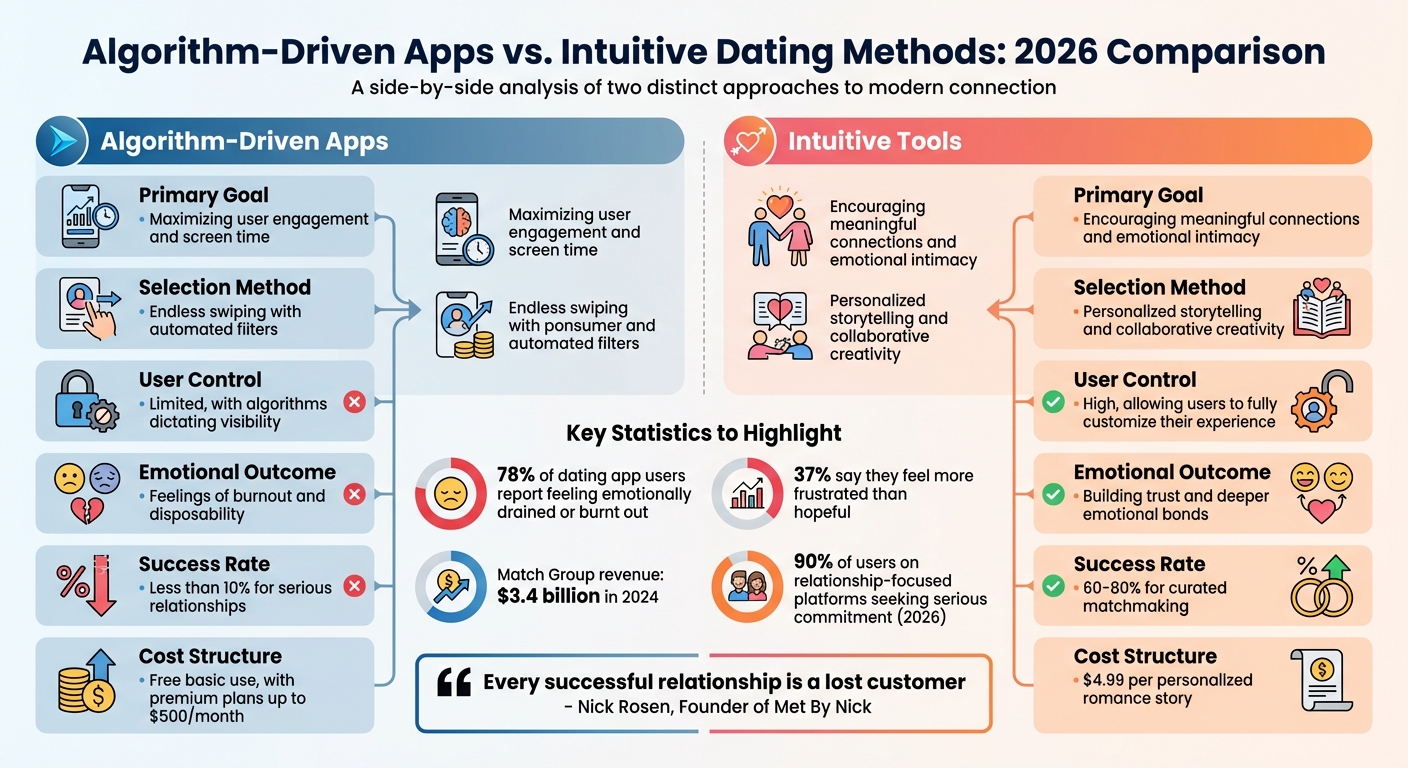
Algorithm-Driven Dating Apps vs Intuitive Dating Methods Comparison 2026
Comparison of Key Features and Outcomes
Algorithmic dating apps might keep you endlessly swiping, but intuitive tools aim to build genuine connections. As professional matchmaker Nick Rosen explains: "Dating apps are designed to keep you on the app, not to get you into a relationship. Their business model depends on your failure" [1]. The data backs this up, painting a stark contrast between these two approaches.
The numbers tell a clear story. Human-centered methods have a much higher success rate, while traditional dating apps lead to serious relationships in fewer than 10% of cases [1]. On top of that, 78% of dating app users report feeling emotionally drained or burnt out [6], and 37% say they feel more frustrated than hopeful [4].
Here’s how the two approaches stack up:
| Metric | Algorithm-Driven Apps | Intuitive Tools |
|---|---|---|
| Primary Goal | Maximizing user engagement and screen time [5] | Encouraging meaningful connections and emotional intimacy |
| Selection Method | Endless swiping with automated filters [6] | Personalized storytelling and collaborative creativity |
| User Control | Limited, with algorithms dictating visibility [6] | High, allowing users to fully customize their experience |
| Emotional Outcome | Feelings of burnout and disposability [4][6] | Building trust and deeper emotional bonds |
| Success Rate | Less than 10% for serious relationships [1] | 60–80% for curated matchmaking [1] |
| Cost Structure | Free basic use, with premium plans up to $500/month [12] | $4.99 per personalized romance story |
Unlike traditional dating apps that rely on the "slot machine" effect - using unpredictable matches to trigger dopamine hits [5][6] - Roma Llama offers something different. The platform encourages couples to create shared, intimate narratives, moving away from choice overload and toward intentional, heartfelt connections. In 2026, this shift reflects what people are craving: authenticity over algorithms and meaningful depth over endless data points.
Conclusion: Why Intuition is the Future of Love in 2026
The End of Algorithm Fatigue
Many Gen Z users are finding dating apps increasingly exhausting [1]. This frustration highlights a bigger problem: people are spending hours swiping with little to show for it. The emotional toll of this low payoff is pushing users to look for alternatives beyond algorithm-driven platforms.
This isn’t just about annoyance - it’s rooted in how humans are wired. Dating apps tap into our brain’s response to unpredictable rewards, keeping us hooked but unsatisfied [5]. Georges Abi-Heila captures the issue perfectly:
"Algorithms reward efficiency while intimacy requires the opposite. What makes intimacy real is precisely what cannot be ranked, predicted, or scaled" [6].
By 2026, there’s a noticeable shift toward tools that value authenticity and emotional connection. People are craving experiences that feel natural - ones that foster warmth and genuine bonds. As dissatisfaction with the current system grows, the demand for a more intuitive, heartfelt approach becomes crystal clear.
How Roma Llama Leads the Way
Roma Llama is at the forefront of this movement, offering something refreshingly different. Instead of endless swiping, it helps couples create personalized romance stories that bring them closer. For just $4.99, partners can customize every detail - spice levels, characters, settings - and craft a shared narrative that strengthens their connection. This approach moves away from impersonal digital interactions, embracing a more meaningful and human way to connect. It’s a perfect fit for the evolving vision of love in 2026.
FAQs
How do I meet people offline without it feeling awkward?
If you want to meet people offline without it feeling awkward, try activities that naturally bring people together. Joining hobby-based groups, attending local events, or signing up for athletic clubs are great options. These shared experiences take the pressure off and make it easier to connect with others. When you focus on enjoying the activity itself, conversations flow more easily, and genuine connections can develop in a relaxed, natural way.
What’s a simple way to build emotional intimacy early on?
One effective way to nurture emotional intimacy early in a relationship is by incorporating meaningful daily check-ins. Try asking thoughtful questions such as, "What was the best part of your day?" or "How are you feeling emotionally today?" These kinds of conversations help you gain a deeper understanding of each other.
Combine these moments with active listening - really paying attention without distractions - and showing genuine appreciation for what your partner shares. These small but consistent habits build trust, create a safe space for openness, and encourage vulnerability, laying the groundwork for a stronger connection.
How can couples use storytelling to talk about desire safely?
Couples can explore their desires in a safe and respectful way through storytelling. By fostering a judgment-free environment, partners can openly share their feelings, boundaries, and needs without fear. This kind of open dialogue encourages curiosity and understanding, creating both emotional and physical safety in the relationship. Tools like Erotic Map Guides can help by promoting self-awareness and shared responsibility, making it easier to communicate desires and limits clearly. Storytelling, in this context, builds trust, strengthens intimacy, and deepens the connection between partners.
Key Takeaways
- 1
Dating apps might claim to help you find love, but their real goal is to keep you swiping.
- 2
Many Gen Z users are finding dating apps increasingly exhausting [1].

Written By
Dr. Julian ChenCognitive Scientist
Dr. Julian Chen is a researcher studying the neurobiology of love and the impact of advanced technology on human emotional connection. His work explores how expertly-crafted personalized content can serve as a catalyst for real-world intimacy and self-expansion.
View Expert Profile →Keep Reading
Why "Happily Ever After" Is A Myth (And What's Actually Better)
Read Article →Is Your Relationship Too Comfortable? The Subtle Signs Boredom is Creeping In
Read Article →Is "Situationship" the New Normal? The Pros and Cons of Undefined Relationships
Read Article →The Data on Dating Apps: Are They Engineered for Love or for Profit?
Read Article →Explore Related Stories
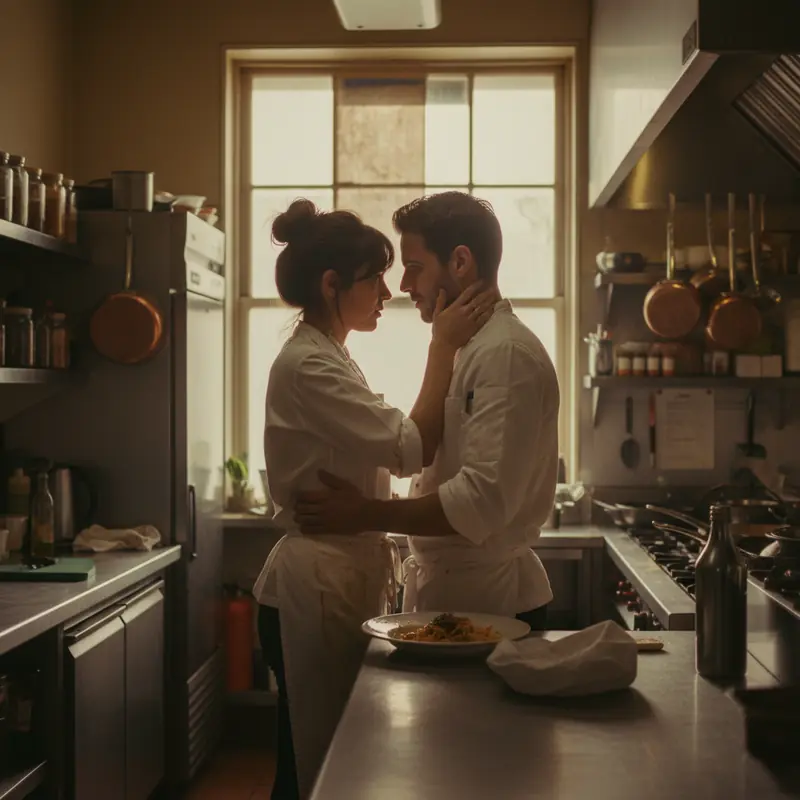
The Rival Chefs
Chef {NAME1} and rival {NAME2} are forced to share a tiny kitchen for a charity event. As they fight over counter space and ingredients, their professional bickering turns into an intense physical hunger.
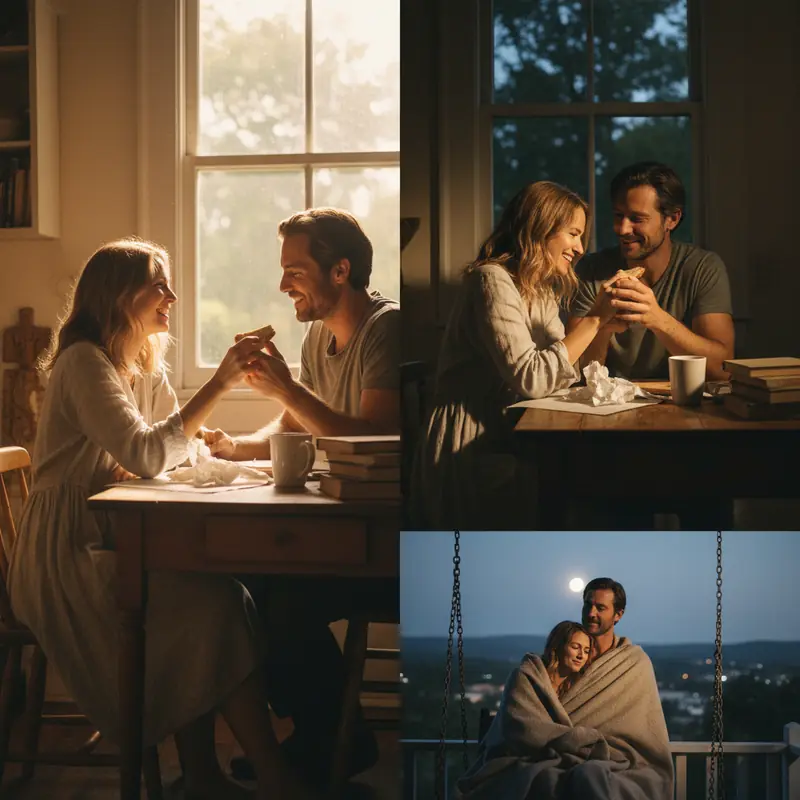
The Slice of Life Arrangement
{NAME1} and her reclusive neighbor {NAME2} enter into a fake relationship to solve their social problems. As they navigate family events and quiet dinners, their 'arrangement' turns into a real, heartwarming passion.
Reference Sources
This article was developed using research and insights from the following clinical and narrative authorities: